Tuesday, August 05, 2025

“Across Yosemite’s Wilderness: A Trailblazing Woman’s Career Protecting The Park’s Backcountry”

“Across Yosemite’s Wilderness: A Trailblazing Woman’s Career Protecting The Park’s Backcountry”
Laurel Munson Boyers was born in Yosemite Valley. In 1903 her great grandfather, who ran a way station for park visitors, welcomed Teddy Rosevelt and John Muir. Her parents lived near Ansel Adams, and after she joined the park service in 1976 Boyers guided former First Lady Laura Bush and companions through the backcountry (the two becoming longtime friends).

Having served the park for more than thirty years, “the first female full-time mounted wilderness ranger” and a decade as “Yosemite’s first female wilderness manager,” Boyers recounts her life in a two-part memoir, “Across Yosemite’s Wilderness: A Trailblazing Woman’s Career Protecting The Park’s Backcountry” ($22.95 in paperback from Falcon Guides; also for Amazon Kindle).

Dozens of photographs celebrate the park’s grandeur and its dedicated workers, with artwork by brother Lex Munson, who lives outside Nevada City. Boyers herself still lives in the park with husband Darell but writes me that “my nephew, his wife, son and daughter (named Laurel Ann after me) live in Cottonwood.”

The book’s first part is “a telling of my last wilderness patrol, an expedition across the entire length of Yosemite National Park in 2007, when a group of us took a 10-day backcountry journey all the way across the park.” Part two “holds essays about the years that led up to that remarkable patrol … caring for that part of the park that is beyond Yosemite Valley.”

Though she recounts scary experiences leading horses and mules in slippery environments and hearing strange sounds when she is all alone in a backcountry cabin, Boyers focuses on what she calls the timeless benefits of the wilderness: “witnessing the wonder of nature, of intact ecosystems, of living and breathing and enjoying open space and wildness with one another, or even while alone.”

Just as Chicoans do with Bidwell Park, she wrestles with just how human-accessible to make Yosemite’s backcountry. “We need to maintain humility and understand that we don’t have all the answers,” yet “we need to eliminate the impact of humanity’s presence on the nonhuman world as much as possible to allow these systems … to evolve naturally. Our future may depend on it.”


Tuesday, July 29, 2025

“Slugs Don’t Eat Arugula: Tales Of Whimsey, Woe, And Wisdom From The Kitchen And Garden”

“Slugs Don’t Eat Arugula: Tales Of Whimsey, Woe, And Wisdom From The Kitchen And Garden”
“I enjoy gardening,” writes Chicoan Jeremy Miller. “I enjoy the feeling of being linked to my backyard and the plants and animals that live there, … noting the traffic of insects that zip around the sunflowers, and having the ability to pluck a cherry tomato off the vine and pop it directly into my mouth … not only do I know where my food came from, but I also know that I was a part of that process.”

But for Miller, not every foray into gardening goes as planned (there is, after all, the “Nightmare on Avocado Street” and the “Peach Pit Conspiracy”), and not every culinary attempt is a triumph (“Even butter can’t make bitter beets taste better”). That makes his collection of short essays, drawn and edited from Edible Shasta-Butte magazine over the years, deliciously relatable.

“Slugs Don’t Eat Arugula: Tales Of Whimsey, Woe, And Wisdom From The Kitchen And Garden” ($14.95 in paperback from Memoir Books) is available in Chico at Northern Star Mills and C Bar D Feed. 

Chapters move thematically, from the kitchen to the garden, to a dubious look at natural remedies (“The Witch Doctor’s Pantry”) to Miller’s diet regimen (“Kettle Chips Are My Kryptonite”) and, finally, to recipes that include carrot cake muffins (gluten free) and sauerkraut (makes three quarts and takes three weeks).

Though he has books on organic gardening and “compost care,” Miller admits all the good advice mostly ends up on the compost heap. Instead, he wants “to embrace the simplicity of a ‘Tarzan the Farmer’ mentality: ‘Dig! Plant seed! Water! Grow! Eat!’ Somewhere in between diligence and naivety, my garden turns into a jungle, and Tarzan is happy. And the gophers are happy. And the snails. And the weeds. And the zucchini.”

Some pocket gophers jump over barriers. So “I had yet another gardening excuse … ‘My real challenge is the overland migratory … gophers (“OMG!”), which are actually endemic to west Chico, California.’ I don’t even care if it is true; I intend to use it over and over.”

Get the book. The stakes, as gardeners say, couldn’t be higher.


Tuesday, July 22, 2025

“The Redemption Of Elijah Kidd Kane”

“The Redemption Of Elijah Kidd Kane”
“As long as Paul Early Kane had been married,” we are told, “he desired his boys to have the best life opportunities. He had attended Harvard-Westwood Academy for the Gifted in the southern hills of Ojai Valley, California, before going to Harvard University….” 

But when Paul’s favored son, Joseph, fails to get into the Academy and his younger brother, Elijah Kidd Kane, 13, is accepted instead, and taken under the wings of the Academy president, Grant Humphreys Harvard, it becomes clear to readers that Elijah is being groomed for a secret, and sinister, project.

“The Redemption Of Elijah Kidd Kane” ($12.95 in paperback, independently published; also for Amazon Kindle) is the first in a new immersive fantasy series by former longtime Chicoan David Dirks, now living in Brentwood with Karen, his wife of 54 years.

Seen as “ordinary,” Elijah is neglected by his socialite mother; a child of privilege, “he lived life by allowing it to happen to him.” The boy is warned by his grandfather, Emmanuel, that he has visions regarding Dean-Headmaster Samuel C. EngleHoffer. “He is of German Aryan descent and still holds to some of their most ancient principles… He will use his power to trip you.”

The tension between Harvard and EngleHoffer notwithstanding, they both worship at the giant Sphere at the Academy, a broken sphere in which a smaller, perfect sphere emerges. There is talk of appealing to the Keeper, and a plan to use Elijah as Harvard’s agent to create a science and technology academy in Botswana. 

Somehow the “Spirit of Mars,” the spirit of the late scientist Nikola Tesla, has made it possible to establish free power for that African country, getting the populace used to all the electrified amenities, before lucrative charges are suddenly imposed. 

It’s clear a spiritual battle is taking place. A young Botswanan girl, Esi Ada Ogolla, must not only challenge the Interior Minister, a warlock, who craves spiritual power for himself, but bring Elijah to see the true Light and aid Esi and the other New Freedom Warriors in stopping sex trafficking of children.

There will be more to come in the series. Victory will not be easily won.

Tuesday, July 15, 2025

"New Leaf"

"New Leaf"
Chicoan Nancy Anderson’s children’s book is a parable about brokenness leading to new life. Beautifully illustrated by Madeline Einfalt, with design layout by Nica Petrova, “New Leaf” ($25 in hardcover, independently published, available at Made in Chico or from the author at NewLeafTeamChico@gmail.com) is also a tribute to New Leaf Home in the lowland region of southern Nepal. (Proceeds from the book will be donated to the home.)

After the end of the story there are several pages devoted to New Leaf Home. “Since 2010,” Anderson writes, “thirty girls have experienced hope out of brokenness. A miracle has happened leading to a new leaf, new life. Blossoming young women are bearing fruit in their redeemed lives.” And the founding directors “thank God that He changes the lives of our New Leaf girls!”

A little girl tells the story: “In a small rural village in Southern Nepal stands my mango tree. … My mango tree stands firmly planted near the well. It gives us delicious green mangos in the summer. Leaves of every shade of green delight my eyes. Tall grasses bend gently in the breeze.”

But then, one night, “A frightful storm comes to my village. Thunder booms. My eyes are big. My heart is pounding. … Frequent lightning flashes across the blackened sky. Rain falls fast and hard. I am afraid.”

In the morning, “I run out to see my mango tree. It is broken. The branches are ripped off, and the remaining leaves are shredded.” Some in the village think the tree is dead and needs to be cut down. Others, though, even as the seasons progress and nothing seems to change, say “Let’s wait and see what happens.”

“The broken tree needs to be nurtured. A few people, whom I do not recognize, come forward to gently protect and lovingly care for my mango tree.” And then: “I see some new yellowish pink leaves coming from one of the torn branches. My mango tree is alive!”

That nurturing will, in the end, bear much fruit.

Nancy Anderson is Nancy Wiegman’s guest on Nancy’s Bookshelf on Northstate Public Radio, mynspr.org, Wednesday, July 16 at 10:00 a.m., repeated Sunday, July 20 at 8:00 p.m.


Tuesday, July 08, 2025

“Wildfire Days: A Woman, A Hotshot Crew, And The Burning American West”

“Wildfire Days: A Woman, A Hotshot Crew, And The Burning American West”
Redding-based Kelly Ramsey has written an intense “you are there” memoir of 2020 and 2021 when she fought fires on the Rowdy River Hotshots. These were “Wildfire Days: A Woman, A Hotshot Crew, And The Burning American West” ($29.99 in hardcover from Scribner; also for Amazon Kindle and in audiobook format read by the author).

Back then “I lived in a town called Happy Camp. Yes, that’s a place. This was the real Northern California, not the Bay Area, thank you very much. If the Golden State is a bent appendage, its swollen forearm bearing LA like a red boil, my California lay above the elbow.”

Divided into the two seasons, the first focuses on Ramsey as a rookie hotshot. “Hotshot crews,” she writes, “are physically and operationally intense. … These crews tackle the most difficult and remote parts of wildfires, doing the hardest manual labor and hiking deep into the wilderness to places other crews can’t or won’t go.” 

And “scariest of all, while I had hoped the crew would pick up another lady or two, I learned that I’d be the sole woman and the first in nearly a decade. To many of the guys, I’d be the only girl they’d ever worked with. Just me and nineteen men who were probably faster, stronger, and more knowledgeable than I was. No big deal.”

That season they worked the Slater Fire, North Complex, and August Complex, among others. The second season would take them to the Monument and Dixie fires, and more. In this season personal entanglements rise to the fore. Engaged to a non-hotshot firefighter, Ramsey finds a deep-seated acceptance among the Rowdy River crew—just one of the dudes—and a soul-deep freedom she doesn't have with her boyfriend.

The child of a dysfunctional and broken family, the influence of her alcoholic father looms large in Ramsey’s yearning to find herself and be herself. Beautifully written, often raw, it’s an unforgettable journey, callouses and all.

Kelly Ramsey is Nancy Wiegman’s guest on Nancy’s Bookshelf on Northstate Public Radio, mynspr.org, Wednesday, July 9 at 10:00 a.m., repeated Sunday, July 13 at 8:00 p.m.


Tuesday, July 01, 2025

“Rogue Allies: The Strategic Partnership Between Iran And North Korea”

“Rogue Allies: The Strategic Partnership Between Iran And North Korea”
Former Marine Bruce Bechtol Jr., who grew up in Chico, teaches in the Department of Security Studies and Criminal Justice at Angelo State University in Texas, and is a former intelligence officer for the Defense Intelligence Agency.

Together with Anthony Celso, professor of security studies at Angelo State University, who specializes in the politics of the Middle East, the two have produced a ground-breaking study of “Rogue Allies: The Strategic Partnership Between Iran And North Korea” ($29.95 in paperback from The University Press of Kentucky; also for Amazon Kindle).

Published at the end of April 2025, “this book,” the authors note, “is the first comprehensive study of the North Korea-Iran relationship and the damage that partnership has done to Middle Eastern and Asian security.” The book documents in scholarly detail all that is known about that partnership (fully half the volume is taken up by notes and a comprehensive bibliography).

“We argue,” they write, “that analysts should view Iran and North Korea’s partnership as an integrated global threat network—North Korea’s supplies of advanced weapon technologies, platforms, and missile systems are provided to Tehran’s armed forces in return for Iranian cash and oil.”

Furthermore, “Financial transactions between these two heavily sanctioned nations are maintained by an elaborate system of clandestine criminal finance spearheaded by a global network of front and shell companies.” Cryptocurrency is used to launder money involving Russia and China. Though Iran and North Korea are not ideologically aligned, the marriage of convenience is clear if one follows the money.

As for policy implications, Bechtol and Celso write that “within months, Iran could fabricate enough weapons-grade fissile material to produce a handful of nuclear weapons.” Presciently, they note that “American provision of bunker-busting bombs for the Israeli Air Force will be vital to the success of a future military strike against Iran’s diverse nuclear infrastructure”—though “such a development will not guarantee that the regime will fail to restart its program.” The future, it seems, is now.

Bruce Bechtol Jr. is Nancy Wiegman’s guest on Nancy’s Bookshelf on Northstate Public Radio, mynspr.org, Wednesday, July 2 at 10:00 a.m., repeated Sunday, July 6 at 8:00 p.m.


Tuesday, June 24, 2025

“Sanctuary Not Certain: American, British, Australian, And Canadian Hospital Ships In The European—African—Middle Eastern Theatre In World War II”

“Sanctuary Not Certain: American, British, Australian, And Canadian Hospital Ships In The European—African—Middle Eastern Theatre In World War II”
“During World War II,” Chicoan David Bruhn writes, “German/Italian aircraft purposely bombed and sank thirteen Allied hospital ships in the European Theatre. A fourteenth hospital ship was sunk by a German mine in the English Channel off Juno beach, during the Normandy invasion.” That meant that wounded “servicemembers could not be assured of safety aboard hospital ships….”

The unheralded story is told in “Sanctuary Not Certain: American, British, Australian, And Canadian Hospital Ships In The European—African—Middle Eastern Theatre In World War II” ($33 in paperback from heritagebooks.com). Replete with photographs, charts, tables and maps, the book chronicles Allied hospital ships including the 24 operated by “civilian Merchant Marine employees of the Transportation Corps” for the U.S. Army.

Hospital ships were “converted passenger liners or troop ships” with clear markings. Many of the U.S. Army ships were named for flowers, like Shamrock and Marigold; others for “deceased Army doctors and Army nurses who had served with distinction”; still others retained their original names. “Each vessel had to be registered officially as to name and characteristics to be readily recognizable by the enemy.”

Details of life aboard hospital ships are hard to come by (no official diaries were required), but Bruhn has compiled a comprehensive account using available evidence. The chapter on the Normandy invasion on June 6, 1944 notes on that day alone there were some ten thousand Allied casualties, “killed, wounded, and missing in action,” including 6603 Americans. The role of British hospital carriers was crucial.

Bruhn writes me that this, his thirty-sixth book (with subjects including “naval history, competitive running, building land yachts, or creating” a Stand Easy “hideaway pub”), will be his last; he and his wife Nancy plan to travel. He’s created a “legacy website,” davidbruhn.com, where viewers can request help “in learning more about a relative’s naval service.”

After Bruhn’s deep dive into naval history, a little shore leave is not uncalled for.

David Bruhn is Nancy Wiegman’s guest on Nancy’s Bookshelf on Northstate Public Radio, mynspr.org, Wednesday, June 25 at 10:00 a.m., repeated Sunday, June 29 at 8:00 p.m.


Tuesday, June 17, 2025

“The Nimbus: A Novel”

“The Nimbus: A Novel”
Former Chico High student body president Bobby Baird, who grew up in Chico and now resides with his family in Brooklyn, earned a doctorate from the University of Chicago Divinity School. He is now a mind-bending first-time novelist. 

We begin with the odd “to the reader” note, that “since you’ll have every reason to distrust what follows—I still hardly believe half of it myself—let me confess, here at the outset, that I have taken certain liberties with the truth.” Names have been changed “to protect the innocent, yes, but also to protect myself, who am far from innocent.”

It's early in the twenty-first century, and Adrian Bennett, 50, divinity school associate professor at a “not particularly well-known university on Chicago’s South Side,” has two sons, Luca, 2, and Max, 5, and one day graduate student Paul Harkin, whom Adrian is mentoring, sees Luca, well, glow, “like flame you see on the underside of a broiler, something low and close.” 

“The Nimbus: A Novel” ($29.99 in hardcover from Henry Holt and Co.; also for Amazon Kindle) gives it a name.

In the days to follow it will come and go. It can’t be photographed, and Adrian’s wife, Renata, 38, can’t see it. Not everyone can. This drives a further wedge into Adrian’s and Renata’s uneasy relationship (she’s given up her career for Adrian) and allows Baird to satirize academia’s obsession with the arcane--and Adrian’s ambition.

Enter 40-something Warren Kayita, librarian and ex-Div School student, from Uganda. He’s seen Luca’s nimbus and others who have begin to believe it fosters good luck. Indebted to a mobster-type who will forgive everything for another look at Luca, Warren plays a key role in a tragic encounter. 

Baird raises, but does not answer, questions about the reality of the nimbus. “Every story starts with a lie,” he tells us. Does it end that way as well?

Bobby Baird is Nancy Wiegman’s guest on Nancy’s Bookshelf on Northstate Public Radio, mynspr.org, Wednesday, June 18 at 10:00 a.m., repeated Sunday, June 22 at 8:00 p.m. He’ll be speaking and signing books at Chico’s Barnes & Noble on Saturday, June 21 starting at noon. The public is invited.


Tuesday, June 10, 2025

“Evergreen Lodge: A Memoir”

“Evergreen Lodge: A Memoir”
The cover shows two best buds in the summer of 1982, in front of Half Dome, Tom on the left and taller Brad on the right. Tom Bross would go on to graduate from Chico State in 1986, then to careers in marketing, advertising, and (now) memoir writing.

“Evergreen Lodge: A Memoir” ($16.99 in paperback, independently published; also for Amazon Kindle and audiobook format read by the author) takes the reader to the summers of 1977 and 1978 and “an often dysfunctional family business located near the west gate of Yosemite National Park.” 

Brossie, raised by a hippie mother who calls him Jupiter, is 15. Lots of extended family members and friends round out the cast for a joyous romp of a teen sex comedy reminiscent of “Fast Times at Ridgemont High.” 

Bross superbly captures the ethos (and raunchiness) of the times, and there are (sweet) pictures. He writes that the events in the book “are mostly, but not exactly, true. Duh. How could they be? … I was fifteen and sixteen years old and twenty-two percent hormones by body weight…. This is an homage to the era when we were no longer children and not yet adults, and a new song was enough to blow our minds.”

For Bross and Brad and chums, the sex jokes come hot and heavy, especially when new babes move into the nearby lodges. Flights of fancy stoke their imagination, like when a drunken woman twice Brossie’s age makes eyes at him. “She’s a mammal. She’s female. She’s alive. She meets my minimum requirements. But this woman is also attractive and sexually mature. And she’s wasted. Now all my boxes are checked. I’m thinking, I’m getting de-virginized tonight.” But, uh, “consent requires consciousness.” Duh. 

Though he never does get de-virginized, he does (reluctantly?) peer through the peephole made to the women’s shower, check out the female guests (a “smorgasbord of hotties”), and play with--words. If there’s Boise, Idaho, “shouldn’t there be a Girlsy, Wyoming, too?” 

Pringles, beer and pot round out the food groups, and a Half Dome hike with buds makes a forever memory. Bottom line: “We’re fifteen, we’re idiots, and you only live once.”


Tuesday, June 03, 2025

“Sunset Gratitude: 365 Hopeful Meditations For Peaceful And Reflective Evenings All Year Long”

“Sunset Gratitude: 365 Hopeful Meditations For Peaceful And Reflective Evenings All Year Long”
For Chico State grad Emily Silva Hockstra, the natural world is replete with wisdom in how to weather loss. Sunsets, for example, “symbolize an ending. When things end, it can feel hard to accept and surrender to what is. Letting go is rarely easy….” So, in a book of short daily thoughts, about “finding hope after a period of grief,” “I wanted these passages to be gentle reminders that it’s okay to take your time.” 

Thus comes “Sunset Gratitude: 365 Hopeful Meditations For Peaceful And Reflective Evenings All Year Long” ($19.99 in hardcover from Rock Point; also for Amazon Kindle). As a life coach (soulsadventures.com) living in San Diego with her husband, she found in 2020 “that my dream of having a child would never come true…. Although this book was born through the grief of infertility, it addresses many of life struggles” through patient inner explorations.

Suffused with Zen Buddhist and Daoist sensibilities, the author’s short meditations will strike a chord with many readers. Take the entry for June 3: “Not all plans will work out, but trying something new will create change within. Bravery blooms in the trying. Resilience takes root when things don’t work out. Confidence shows up the more we try to get back up. Your dreams are yours for a reason.”

The first day of each month offers an affirmation, such as for October: “As I notice hope sprouting once again in my heart, I recognize the growth that is taking place in what was once an empty space with deep gratitude.”

The inward journey should not be lonely: “Allow the tears to fall, call out for support, communicate as loudly as you need to. Grief needs a witness as it honors the ending of something significant.” 

She tips the hat to friends expressing the qualities of all twelve signs of the Zodiac. “Each moment of marvel reminds us that we are part of an infinite universe and connected to the flow of life. The next time you look up at the sky, remember that you contribute to the interconnectedness of the universe. Then pause and breathe in gratitude.”


Tuesday, May 27, 2025

“Love Your Brain: The 7 Habits Of Brain Health To Recharge & Surge”

“Love Your Brain: The 7 Habits Of Brain Health To Recharge & Surge”
Chico ophthalmologist David Woods faced many losses. His Paradise ophthalmology practice was destroyed in the Camp Fire. Rebuilt, the new office “sat nearly empty for months” due to Covid-19. Then, in 2021, “my world shifted in a way I had never really had preparation. My beloved and wonderful mother, Sharron, passed away. I felt as if the ground beneath me crumbled.” 

Though the practice began to thrive, and his family offered support, Woods struggled through “the fog of grief.” He started to research the brain and its response to loss. “I began to see, especially after the age of 40, how our lifestyle choices … have a monumental impact on the health and vitality of our brain cells.”

Teaming with Chico State grad Rory Ferguson, who will be pursuing her PhD in cognitive neuroscience at Lehigh University, Woods provides an encouraging guide for how to “Love Your Brain: The 7 Habits Of Brain Health To Recharge & Surge” ($12.15 in paperback, independently published; also for Amazon Kindle).

The book begins with charts for a 15-week “transformation plan” and a weekly “brain health check-in” on the seven habits: good diet; optimal sleep; cardio and exercise; “connecting and caring”; “the power of supplements for brain nutrition”; “meditation, faith, spirituality”; and “the power of learning” (“You want a brain that’s always growing? Then learn something every day. Creation and imagination are the seeds of success, and they begin with a curious mind.”)

Woods markets supplements under the names Nutrua and the trademark Brain Health 360, but he is careful to note that it’s important not to “overlook interactions between supplements and medications, which can lead to unintended side effects.” An appendix provides research on each ingredient; there’s also a section on how seasonal allergies affect brain health.

We need to be honest with ourselves, he writes, and develop healthy rituals that move the brain away from constant “survival mode” (doomscrolling, anyone?). One key is journaling. “Whatever challenge you face in your life of stress, you will unlock ideas and personal change when you write, clarify, and put words on the issues in your mind. You will zoom!” 


Tuesday, May 20, 2025

“Right Place, Write Time: A Lifetime Of Memories With Sports Legends”

“Right Place, Write Time: A Lifetime Of Memories With Sports Legends”
Tiger Woods “won nine times in 2000,” Chico State grad Mark Soltau writes, “a year many consider the best stretch in golf history. He won three majors and returned to Pebble Beach in June to capture the U.S. Open by a record 15 strokes.” 

A longtime sportswriter for the San Francisco Examiner, who worked for Tigerwoods.com from 1997 through 2018, Soltau says that “at most tournaments, I would spend time with Tiger … and wish him well. The first time I said, ‘Good luck,’ he glared at me. ‘It’s not luck,’ he said. From then on, I have always said, ‘Play well.’” 

Tiger “did a surprise video when I was inducted into the Chico State Athletics Hall of Fame in 2007.”

Soltau covers his five decades in sports writing with an exuberant memoir, “Right Place, Write Time: A Lifetime Of Memories With Sports Legends” ($19.95 in paperback, independently published; also for Amazon Kindle). No stranger to football (“I covered the NFL for almost 25 years”), Soltau “spent much of my childhood attending games with my mother at Kezar Stadium…. My father, Gordy, was an all-pro end and place kicker for the San Francisco 49ers (1950-58) and led the NFL in scoring in 1952 and 1953.”

Soltau’s book, loaded with photographs, includes chapters on Bill Walsh, Steve Young, John McEnroe, Barry Bonds, Walter Payton (at Laguna Seca Raceway), and Joe Montana (who used the sideline phone, meant to connect with coaches, to call his wife: “I’m just sitting here on the sideline and thought I’d call and tell you I Love You”).

In 1977, as a Chico State senior, Soltau’s father gifted him two tickets to Super Bowl XI, pitting the Oakland Raiders against the Minnesota Vikings at Pasadena’s Rose Bowl. He and a buddy managed to get there and found their seats “were on the 50-yard line on the press box side in the middle of American Football Conference owner’s section.” The Raiders won, 32-14. The two made it back to Chico the next day, “tired and euphoric.”

The book is not a tell-all, but a “let me tell you about my friends.” Well played, Mark.


Tuesday, May 13, 2025

“Doko: Trails, Teahouses, And Turmoil At The Top Of The World”

“Doko: Trails, Teahouses, And Turmoil At The Top Of The World”
Toby is sixteen. Three months after his birthday celebration “in our Northern California town,” he and his father are enroute to Nepal for what turns out to be the adventure of a lifetime and a young boy’s life or death decision.

Chico novelist Kristi Davids, a world traveler herself, tells the story in Toby’s voice, one that wonders at first what his dad is up to with this surprise trip. “Doko: Trails, Teahouses, And Turmoil At The Top Of The World” ($16.99 in paperback from Palmetto Publishing) finds a somewhat self-centered and resentful Toby discovering the meaning of fatherly love and the crucial importance of looking out for others. It’s a young adult novel with a big heart and a heart-pounding conclusion.

A doko is a basket “to carry things from one town to the next on our backs….” It’s also a metaphor for what Toby must discover about himself. There are times he must be carried—and times he must carry others. Good leaders do that, Toby’s dad tells him.

The family lived in Nepal a decade earlier while Toby’s father “worked on a project with USAID” to help farmers “create more productive and sustainable methods for food production.” Then six-year-old Toby made friends with another boy the same age. He and Prem were buddies and are destined to meet again on Toby’s birthday trip.

The goal is to trek the “Annapurna Circuit” in the Himalayas, taking two weeks to ascend to Thorong La Pass at 17,800 feet and then descend back into an oxygen-rich atmosphere. The hike encompasses daunting cliff trails and many small villages along the way. Unexpected blizzards are constant threats.

Toby and his father, along with the guide Kumar, and, as porters, Prem and a boy Toby befriends named Pratik, work as a team for each leg of the journey. Yet, for Toby, something seems off. Indeed so, and the consequences will be disastrous.

Chiya tea is present at every stop. Ah, the smells: “Cinnamon, cardamon, nutmeg, and cloves….” But as the trek continues, young Toby must put comfort aside and find wisdom deep within his soul. Readers will be enthralled.


Tuesday, May 06, 2025

“The Virtue Of Loyalty”

“The Virtue Of Loyalty”
How far should loyalty extend? As Chico State philosophy professor Troy Jollimore writes, “The very notion of being on some side or other, and being ‘true’ to that side through thick and thin, seems in tension with the idea that one should always strive to be on the right side, to join and support those whose actions are morally justifiable and supportable.”

Being loyal—to a spouse or country—would seem to be a virtue, contributing “to the goodness of human life or the functioning of human societies.” But, as Jollimore points out in his introduction to a series of essays on the subject, it’s a “contested topic.” What would it mean to stay loyal to a family member or political figure caught up in wrongdoing?

“The Virtue Of Loyalty” ($35.00 in paperback from Oxford University Press; also for Amazon Kindle), edited by Jollimore, includes ten chapters, by philosophers and others, which consider how family loyalty arises, the sting of betrayal, love and loyalty, and more. The writers, Jollimore notes, address “whether loyalty can motivate and justify actions which have horrific consequences or which are inherently morally awful….”

A key chapter by Jollimore, one of recipients of the University’s Professional Achievement Honors “as a philosopher, teacher, and poet,” asks whether loyalty is indeed a virtue, whether it actually gives us reasons for acting. 

Loyalty (too often?) would seem to lead to pernicious behavior: If a soldier is ordered to massacre women and children out of “patriotic duty” loyalty plays no role in determining the morally right thing to do; it impedes it. And if a soldier is ordered to save women and children, loyalty is irrelevant to knowing that’s the right thing to do.

Jollimore pushes back against these objections in a thoughtful and accessible essay, pointing out that loyalty doesn’t exist in a vacuum: “A loyal friend need not always overlook your imperfections, but they will not seize immediately upon them as a reason for abandoning you and ending their relationship with you.” As for political loyalties, he writes, the greatest “expression of patriotism” might lie in refusing “blind devotion or unconditional subservience.” 

Loyalty is a virtue, but a profoundly complex one.


Tuesday, April 29, 2025

“Box One Of Two”

“Box One Of Two”
Chico, 1984. Gorgeous Heather Fields, 22, works at Serenity Falls, “apartments for seniors who just want a community and an easier life.” One of those she cares for is the aging and quirky Violet Merryweather, who in the 1930s and beyond appeared as an extra in dozens of well-known films, like “Casablanca.” Only don’t call her “Violet.” The V is silent; she is “Iolet.” See? Quirky.

When Iolet dies, Heather, who has not been much out of Chico and has never seen the ocean, will find herself caught up in a bonkers murder mystery in Hollywood and will meet an incredibly handsome young man there, Vince DeLuca, 24, who works Hugh’s Auto Body, named after his now ailing father. Vince mowed Iolet’s lawn back when he was a teenager.

An attorney contacts Vince to say that Iolet has willed him a mysterious, taped-up box, labeled “Box Two of Two.” Guess who’s been willed the other one? “Box One Of Two” ($14.99 in paperback, independently published; also for Amazon Kindle) is by Chicoan Pamela Dean, set in the same universe as her first novel, “And I Love Her Still,” but otherwise unrelated.

Heather and Vince tell the story in alternating chapters, with plenty of  good-natured f-bombs, and it’s clear from the start, when Heather flies to Southern California with Box One and first meets Vince, that hot sex will eventually break out. Dean keeps things smoldering throughout the novel’s first half. 

As the duo finds out more about Iolet’s time in New York and Hollywood, it’s clear that she’s convinced a certain someone murdered her beau, Albert, decades ago. The stuff inside the two boxes leads them to movie props, a cold-case agent, Frank Sinatra, a chicken foot’s meaning, a 1940 Buick, family revelations by both Heather and Vince--and to love.

Vince despairs that his dream of playing baseball for the majors is gone forever, the wound made worse by his pal Gio who went to Chico State and “got picked up by the Dodgers.” Heather realizes “there really isn’t anything for me in Chico” with her dysfunctional family.

But readers can be consoled that that is not the end of the story.


Tuesday, April 22, 2025

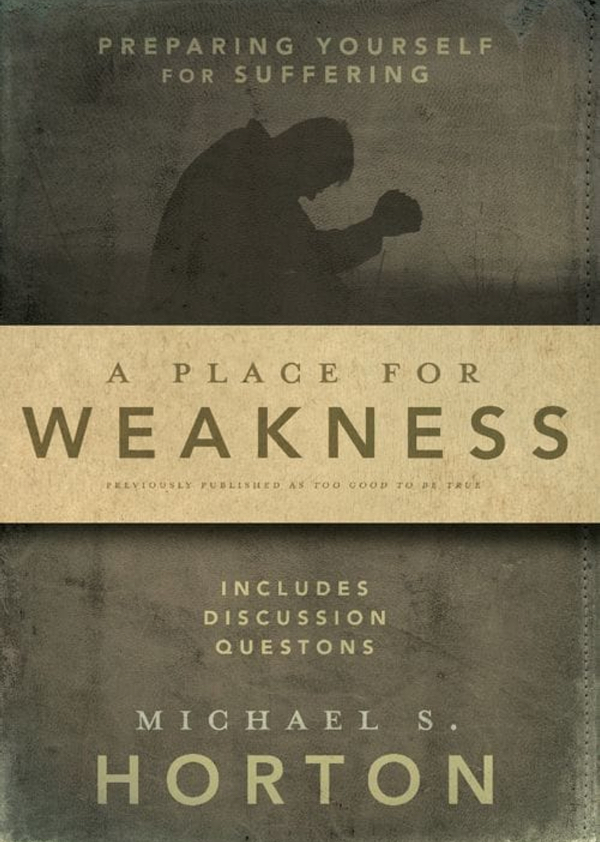
“A Place For Weakness: Preparing Yourself For Suffering”

“A Place For Weakness: Preparing Yourself For Suffering”
Near as I can tell, Paradise High School student Mike Horton, born in 1964, found himself embracing the Christianity of the Protestant Reformation, which emphasizes God’s sovereignty. Many years later, as Professor of Systematic Theology and Apologetics, he taught at Westminster Seminary in California and has published or edited more than forty books. 

In 2006 he wrote a Bible study called “Too Good To Be True: Finding Hope In A World Of Hype.” It was not a theoretical treatise, but included deeply personal accounts of pain and grief, and so the publisher renamed it. “A Place For Weakness: Preparing Yourself For Suffering” ($22.99 in paperback from Zondervan; also for Amazon Kindle), by Michael S. Horton, is a thoughtful companion for the Christian church’s experience of Eastertide.

As Wikipedia puts it, “Traditionally lasting 40 days to commemorate the time the resurrected Jesus remained on earth before his Ascension, in some western churches Eastertide lasts 50 days to conclude on the day of Pentecost….” For Christians, Eastertide is a paradoxical celebration of the “already” and the “not yet.” The book is divided into two sections, exploring the “God of the cross” and the “God of the empty tomb.”

Horton warns against  a “theology of glory” which “presumes to ascend self-confidently to God by means of experience, rational speculation, and merit.” Instead, believers are called to a “theology of the cross” that “sees God only where God has revealed himself, particularly in the weakness and mercy of the suffering.” The proper theology, he writes, is really a “theology for losers.”

In pastoral ministry Horton has dealt often with suffering. He recounts the story of a pastor friend who took his own life, and, closer to home, his wife’s multiple miscarriages, subsequent difficult births (“premature triplets”) and “hormone-induced depression.” His aging father suffers a brain tumor which causes unimaginable anguish.

“We cannot climb up to God,” he writes, “but he has descended to us. This is the gospel in a nutshell, and it sustains us in suffering.” Bottom line: “It is death’s victory, not its reality, which is overcome in Christ’s resurrection.” 

One day all will be made whole. But not just yet.


Tuesday, April 15, 2025

“Self Less: Lessons Learned From A Life Devoted To Servant Leadership, In Five Acts”

“Self Less: Lessons Learned From A Life Devoted To Servant Leadership, In Five Acts”
“My best friend … was headed to Cal State Chico and wanted me to join him,” writes Len Jessup. “My dad, however, strongly advised me to think about getting a good civil service job like he had….” Not quite confident enough, Jessup first attended a community college near their home in Fort Jones. But eventually he graduated with an MBA from Chico State in 1985, and over the years an extraordinary series of leadership opportunities opened up for him.

He retired in 2024, having been “a two-time business school dean and a two-time university president…. On the other hand, in many ways, I’m still that quirky Italian squirt, the son of a fireman, the grandson of Italian immigrants, still unsure, still working on my confidence, continuing to want to learn and grow and to be in service to others.”

“Self Less: Lessons Learned From A Life Devoted To Servant Leadership, In Five Acts” ($24.99 in hardcover from Forbes Books; also for Amazon Kindle) asks readers to think of “self” as a verb. Over time “I was starting to ‘self less,’ to act less in my own self-interests and proactively do more for others.”

Pithy chapters chart not just Jessup’s many teamwork successes, but also the low points in his life, like the breakup of his first marriage. Yet becoming a single dad forced him to “self less.” 

The first act, “Origins,” is self-reflective, acknowledging family influence, especially from his father; “Beliefs,” is about forming a team which believes in the dream; “Adversity” deals with often subtle resistance to a project; “Impact” focuses on what can be done, not who gets credit; “Legacy” is about philanthropy, about a vision that will outlast an individual.

Jessup embodies his life purpose: “When I get to the end of my path, I want to be able to look back in that moment and know that I did everything I possibly could, to positively impact as many people as I possibly could, and that I never shied away from an opportunity to do so.” 

The young man lacking self-confidence became a wiser man who developed confidence in others.


Tuesday, April 08, 2025

“Beasts Of The Border”

“Beasts Of The Border”
The border wall between Arizona and Mexico rises thirty feet, with pillars sunk in concrete ten feet down. In 2023 the wall becomes a flashpoint for the fate of a migrant family fleeing Nicaragua, drug smugglers, Arizona ranchers, a jaguar named Solitario, and two biologists hoping to see a jag. 

“Beasts Of The Border” ($10 in paperback from Long Creek Dutch Publishing), by former Chico City Council member Scott Huber, is a page-turner that grows in intensity, deeply compassionate and horrifyingly violent. 

Solitario is moving north from southern Sonora, Mexico, in search of a mate. In Nicaragua, Pedro Lopez and his family must leave after he is threatened because his brother criticized the government. His wife had birthed three children and they had also taken on two young nephews. “Now at 24 years of age, winsome Concepción was mothering five children under the age of 10.”

Their harrowing attempt to reach the United States, thousands of miles away, including jumping on a freight train called “the beast,” brings terrible loss. 

The novel also tells of two Arizona ranchers on the border. Marvin Estep “truly believed that brown-skinned people were an inferior race.” Meredith Gregg, contrariwise, “spoke fluent Spanish and was empathetic to the plight of many of the border-crossers.” It is unclear what the new border wall will mean for those fleeing from the south.

For the biologists, Ripley West and Tony Ramirez, the wall would seem to make it very difficult for wildlife to move across borders in one of the richest habitats in North America. More specifically, the two set up a series of cameras in an effort to capture images of that rarest of species, the jaguar. When Marvin mistakes Tony for a migrant, and shoots his face with birdshot, it is unclear just who the beasts are.

Huber brings nuance to the story. Border Patrol agent Sergio Jiménez, one of the “good guys,” recognizes the need for a wall “to keep my country safe from drug traffickers and terrorists and smugglers. But I see way more needy people and families crossing than criminals.”

All the storylines merge at the end in a way shaken readers will not soon forget.


Tuesday, April 01, 2025

“A Catalog Of Burnt Objects”

“A Catalog Of Burnt Objects”
Shana Youngdahl writes that “my hometown of Paradise, California, was obliterated in a matter of hours by the Camp Fire…. I wanted to honor my town. I also wanted to raise awareness about the realities of climate change.” Her new YA novel, told by Caprice (Cappi) Alexander, on the cusp of turning 18, does that, and more, in a story not just about a fire, but one of “family, community, and first love.”

“A Catalog Of Burnt Objects” ($19.99 in hardcover from Dial Books; also for Amazon Kindle) imagines Sierra, a kind of “twin town” to Paradise, “one whose disaster I witnessed from afar, and one whose disaster I lived through, navigating alongside my characters.” Youngdahl (shanayoungdahl.com) was in Maine at the time, and now lives with her family in Missouri where she teaches in the MFA in Writing Program at Lindenwood University.

Cappi and her family welcome back brother Beckett from a four-month stint in rehab. Beck is a kind of “agent of chaos” for Cappi. Yet she sees his loneliness: “Twenty-one, his own best friend unable to even blink a hello.” (Beck had escaped from a truck accident; Mason was on months-long life support at UC Davis Medical.)

Caprice knows loneliness, too; only her Gramps really understands her. He’s living alone, his wife in a care facility in town.

Caprice is working on coding an app to attract folks to Sierra. Her bestie, Alicia, is helping. Enter a young man named River, and Beck is not the only one to see the sparks. “Cappi’s full-on love-zombied, and she just met him,” says Alicia.

The chapters count down, 8 weeks before, 5 weeks before, four hours before. Smoke. Then the conflagration which comes midway in the story. In desperate efforts to escape, Cappi and Beck make a fateful life-and-death decision that haunts the novel. For Cappi, it’s all “if, then.” If, if, if something had been different.

Youngdahl’s description of the aftermath—with “cards” detailing burned remains from the various characters, like a Talking Heads LP, house plants or a piano—are searingly real. So much uncertainty in the days after. 

Can there be a better future? Can one imagine “maybe”?


Tuesday, March 25, 2025

“Katharine: Annals Of An Immigrant Family 1866-1964”

“Katharine: Annals Of An Immigrant Family 1866-1964”
Chicoan Dave Schlichting traces the lives of his maternal great grandparents, Katharine Deininger and Gottlieb Hinderer, in a compelling narrative that is a model of historical retrieval. Replete with period photographs, genealogical charts, census documents, timelines, maps and meticulous references (with GPS locations), the research never overshadows the stories. 

“Katharine: Annals Of An Immigrant Family 1866-1964” ($25 in large-size paperback from Chico’s Memoir Books) has two parts. The first is dedicated to family beginnings in the “old country” (southwestern Germany), the passage to America aboard the steamer Havel, time in Michigan and Iowa, and their Minnesota arrival in 1898.

The historical account in Part I gives way to family stories in Part II, drawing on interviews with family over five years beginning in 2000. Presentation of the stories is not haphazard; various family units each receive a carefully researched chapter. 

Though readers may not know this family, the historical background throughout the book, giving context to how one group of families lived in bygone times, brings to life Katharine’s legacy. Katharine and Gottlieb were married in Iowa early in 1862 and had seven children. 

In a tribute to Katharine, Schlichting writes that she “found employment working as a domestic for the Hinderer family in Brend, Germany. She soon began a relationship with the Hinderer’s oldest son Gottlieb. In time, their relationship resulted in Katharine’s pregnancy. By itself, this was not uncommon. The norm for couples was to live with either of their parents, have children, and then formally marry once the young man was earning a sufficient income to support his young family.”

Katharine was no wallflower. “When action was required, she took the lead. She tolerated neither fools nor villains.” Through two World Wars and a Great Depression she and her family survived through “resilience” and hard work (especially on the Hinderers’ farm in Minnesota) and the “strength of character” she instilled.

They faced many challenges but there were also lighter moments; the book concludes with an Appendix of family recipes, including Katharine’s Wax Bean Pickles, Spaetzle, and Pfeffer Nuesse (Pepper Nut) Cookies.

The book is a window into the lives of “ordinary” people--who are far from ordinary.