Thursday, July 06, 2006


University of California press publicist is a Chico State University grad

By DAN BARNETT

Heather Vaughan is a mid-list publicist for the University of California Press (headquartered in Berkeley). When she told me she attended Chico State University, I had to find out more. What follows is an edited e-mail interview.

How long were you in Chico?

"I lived in Chico for five years (1995-2000), while attending CSU, Chico. I graduated in 2000 with a BA in English and minors in theater and biology. I spent most of my non-class time in the green room of the theater department."

Do you have a memorable personal story that exemplifies Chico to you?

"One of my English teachers, Lois Bueler (who retired this year), was an inspiration in a lot of ways. Lois ... had this amazing ability to inspire you to do your best." Through some challenging experiences that semester, Vaughn writes, her professor "made me realize that if I really wanted to do something, all I had to do was try as hard as I could, and I could find a way. Lois made me want to try harder, because she had been so dedicated to teaching despite the difficulties in her life."

Why did you leave Chico?

"I left Chico to look for a publishing job in the San Francisco Bay Area ... at a small business-book publisher. In 2004, I graduated with a master's in Visual Culture: Costume Studies from New York University. I moved back to the Bay Area in November 2005 ... and ended up back in publishing."

How did you get the job of "mid-list publicist"?

"I had seen the job posted on several publishing industry Web sites and knew I had the skills necessary to work in the field. I applied in February, went through the interview process, and was hired in early March. My interests (science, theater, art and fashion history, film) definitely helped me get this job (which involves publicizing books in a large variety of academic fields)."

What exactly IS a "mid-list publicist"?

"I handle the publicity for the scholarly/academic titles with print runs smaller than 2,000 copies. This is actually the majority of books that we publish. The topics include everything from science to music theory to anthropology. I also handle two smaller, trade series (the California Natural History Guide Series and The Huntington Library Series). There are four other publicists at the press who handle the remaining trade titles. For the most part, my job consists of getting the academic books reviewed in scholarly publications and print media. However, I do help set up radio interviews, bookstore events and lectures for the trade books I do handle."

Your "other job" is a "fashion and textile historian." What is that?

"Someone who explores history, culture and society through clothing and textiles created by various groups. My experience has been extremely varied, including work as a museum curator, researcher, lecturer, author and as a historical resource for other museums, auction houses and individuals. I am currently working on an article for a juried publication, Dress (a Costume Society of America publication) and on several chapters for an encyclopedia of fashion (1900-1920 and 1920-1939), to be published by Greenwood Press in 2007. I also hope to publish my master's thesis in book form. (It) examines the fashion design career of Natacha Rambova, the one-time wife of Rudolph Valentino."

I wish Vaughan the best and thank her for helping to keep books alive and for letting us glimpse a publicist's life.

Dan Barnett teaches philosophy at Butte College. To submit review copies of published books, please send e-mail to dbarnett@maxinet.com. Copyright 2006 Chico Enterprise-Record. Used by permission.

Friday, June 30, 2006


Redding author cooks up hard-boiled murder mystery

By DAN BARNETT

It didn't start with murders.

San Francisco-based DelaTek, a software company that employed some 400 people, was poised to hit the big time with a new computer game, a breakthrough in the industry. In the words of DelaTek's chief executive officer, David LaCosta, "We're going after the girls."

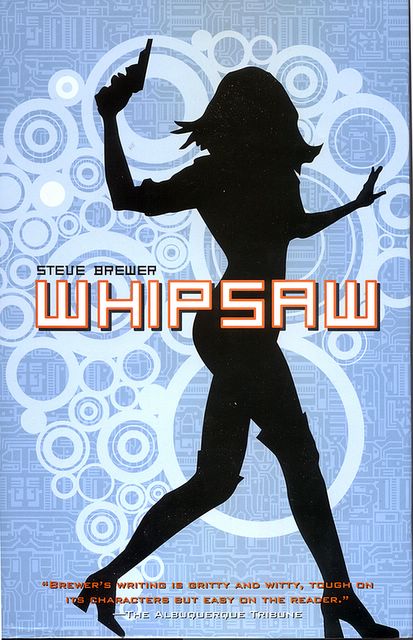
The game is called "Whipsaw" and, according to LaCosta, "the main character ... is a young woman named Delilah. She's a spy, and the player can outfit her with different weapons and send her on more than 300 missions. But there's also a full wardrobe to choose from and the player can construct a social life for her. Send her out on dates. It's like James Bond meets Barbie."

The stakes were high for DelaTek. The game, soon to be released, had created considerable buzz. And then came the ransom demand. Turn over $3 million in cash or the source code would be uploaded to the Internet, putting the game in the public domain and DelaTek's stock in a downward spiral from which it might not recover.

Thus begins the newest thriller from Redding's Steve Brewer. "Whipsaw" ($24 in hardcover from Intrigue Press) makes ideal beach reading. The action never falters, the killings pile up and the hero is someone worth rooting for. He's 42-year-old Matt Donohue, ex-Marine, ex-DelaTek employee. He had been in charge of the company's security, but that was before LaCosta had stolen Matt's wife. The divorce was nasty, and Donohue had left the company with lots of stock options and a bad taste in his mouth.

But Matt is drawn back into DelaTek's orbit when a CD arrives at the company and Whipsaw's "Delilah" appears on the computer screen demanding that Matt deliver the ransom in person. Despite his distaste for LaCosta, Donohue is persuaded to make the drop (mostly out of his good guy nature and partly because he wants to protect his portfolio). But things go awry (who would have guessed?) and Matt takes a pounding from the mysterious thieves who get away with the money before DelaTek security can move in.

From there the story gets nicely complicated. Matt meets Kate Allison, head of the DelaTek's network security. "She was tall and slender. ... She looked to be in her 30s, and something about the way she moved made me think she was an athlete. A swimmer, maybe, or a basketball player. I glanced at her hand. No wedding ring."

Then there's Roger Tunney, head of physical security, and Matt's oldest friend, Duke, also ex-Marine, who works for Tunney. "Duke served in the first Gulf War while I was off protecting diplomats" at various embassies, Matt tells the reader. But then Donohue himself is kidnapped by Columbian guerillas. His escape is harrowing. Soon after, Matt musters out and joins DelaTek.

"Whipsaw" features rapid-fire dialogue, a plethora of naughty words, chases, shoot-outs and astute observations: "The two homicide detectives assigned to the death couldn't have looked more different. Frank Kelton was a study in straight lines, mostly vertical. A tall man with a face full of furrows and creases, he wore a narrow black suit that made me think of undertakers. His partner, Lawrence Chin, was roly-poly and friendly, all parabolas and parentheses and pleasant smiles, a happy Buddha in a blue Brooks Brothers suit." Hear the sounds? Straight and tall f's, roly-poly b's. I love it.

Plot twists? Put it this way: If you want sinister set-ups, Steve Brewer is the brew-meister.

Dan Barnett teaches philosophy at Butte College. To submit review copies of published books, please send e-mail to dbarnett@maxinet.com. Copyright 2006 Chico Enterprise-Record. Used by permission.
Thursday, June 22, 2006


They're not just rocks, they're history -- A guide to the Sierra Nevada's geology

By DAN BARNETT

Three decades ago geologist Mary Hill wrote a handbook to the Sierra Nevada's geologic history and it became the standard guide. The aptly named author has now extensively revised her book. It's an armchair traveler's delight and remains an authoritative guide that will well serve a new generation of hikers, campers, and explorers.

"Geology of the Sierra Nevada: Revised Edition" ($19.95 in full-color paperback from University of California Press) contains almost 200 illustrations, including photographs of rock forms and maps showing where to find them. Hill thanks Bill Guyton, professor emeritus of geosciences at Chico State University, "for his careful reading" of the new manuscript and draws on the research he published in "Glaciers of California" (1998). Guyton distinguished between glaciers and smaller "glacierets" and counted 99 glaciers in the Sierra Nevada and 398 glacierets. Hill notes that "the Sierra Nevada has a lot of glaciers, all of them small. If you are looking for the giants of the Great Ice Age, you will have to be content with their spoor."

The book is divided into two sections. The first offers a "do-it-yourself rock identification key." A series of maps divides the Sierra Nevada into regions and shows where to find prominent rock formations in each area. The first map, mostly of eastern Butte County, locates "conglomerate" ("rock ... made up of grains 2 mm or more in diameter, together with coarser fragments") along Big Chico Creek. You can see shale in the Dry Creek area and lava flow and basalt on Table Mountain.

The second part is the narrative, which takes new research into account. In the last few years, she writes, "the Sierra has been put through the plate tectonics intellectual filter, which has told us how the mountains might have been created, and why they are where they are."

The book also expands its coverage of "human exploration of the Sierra Nevada, not just by geologists" but by others as well.

Here you'll find the story of "the first overland party of settlers to attempt to cross the Sierra. ... The group came to be known as the Bartleson-Bidwell party, as it included two men of leadership mold, John Bartleson and John Bidwell, destined to become eminent in what was to be the 31st U.S. state." Here also is the story of "Snowshoe" Thompson, a Norwegian who for two decades, "beginning in 1856, ... carried the mail across the Sierra Nevada from Placerville, California, to Genoa, Nevada (then called Mormon Station), using long skis (then called 'snowshoes') of his own making."

But Hill's great love is the land itself, the "nervous" Sierra, and her account of the devastating Owens Valley earthquake in 1872 tells not only of human destruction but notes that "the Sierra Nevada itself was severely wracked." She quotes John Muir's eyewitness account: "Shortly after sunrise a low, blunt, muffled rumbling, like a distant thunder, was followed by another series of shocks, which ... made the cliffs and domes tremble like jelly, and the big pines and oaks thrill and swish and wave their branches with startling effect."

At the end of the book, a "coda" reflects on geologic time and human time. "Time is all we have," she writes, "and it behooves us to spend it wisely. Some say that the time spent in the mountains is not subtracted from our allotted three-score-and-ten. So cherish the Sierra, and it will generously reward you."

Dan Barnett teaches philosophy at Butte College. To submit review copies of published books, please send e-mail to dbarnett@maxinet.com. Copyright 2006 Chico Enterprise-Record. Used by permission.

Thursday, June 15, 2006


Redding author's first novel is a page-turning murder mystery with a nice twist of ESP

By DAN BARNETT

High schooler Murray Kiefer and Sierra County sheriff's deputy Roman Gates, based out of Riverton, near Whiskeytown Lake, are both trying to solve the same murder. The two are not working together -- they don't even know each other -- but they are working in concert.

On Oct. 17, Nikki Parker, a 16-year-old cheerleader at Canyon High in Riverton, Murray's school, disappeared from the parking lot after practice. Weeks later there are still no clues to her whereabouts. For Gates, a gambling addict now in recovery, the answer must be out there if only a sufficient number of leads can be followed up. For Murray, outsider and son of a prostitute mother, his best leads come from the town cemetery. He is convinced he hears voices from the dearly departed and he considers himself a "friend to the deceased." But then he hears sobbing, something in his mind that sounds like "please help me." And therein lies the tale.

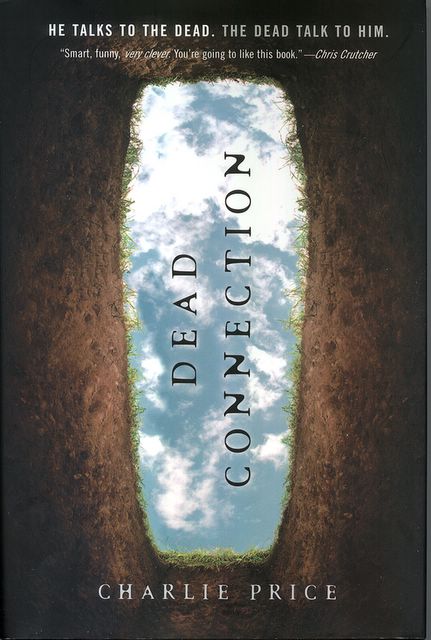
"Dead Connection" ($16.95 in hardcover from Roaring Brook Press) is Charlie Price's first novel, but you wouldn't know it. The Redding-based author writes with consummate skill, creating and interweaving the lives of multiple characters who are far from cardboard cutouts. Price is an organizational consultant and "executive coach"; he writes me that he spent 35 years in education and mental health. His wife, Joan Pechanec, is a psychotherapist with practices in Redding and Mount Shasta.

Price and fellow Redding novelist Steve Brewer ("Bank Job," "Boost") will do a mutual book signing at the Chico Barnes and Noble at 2 p.m. Saturday. The public is invited.

The book earned starred reviews in both Publishers Weekly and Booklist and has been nominated, he writes, for Best Book Young Adults and Quick Picks for Reluctant Young Adult Readers. (A word of caution: There are adult themes and some foul language.)

Murray is the emotional center of the book. A fixture at Forest Grove cemetery ("Don't call it a graveyard!") he hears the voices of "Dearly" (that would be "Dearly Beloved, Born 1944, Died 1969" in a car wreck), "Blessed," "Edwin" and more. They are his friends. "I don't spend much time with the older people," Murray tells us. "I figure they deserved it. Not deserved it, really, but what could they expect? After 40, you're going to die. The ones my age and the children, they almost all need someone to talk to. I comfort them the best I can. They weren't ready. ... Everybody needs a friend."

Enter ninth-grader Pearl (daughter of the kind cemetery caretaker Janochek), who at first sees Murray as some kind of weirdo but later makes alliance with him. Then there's 22-year-old Robert Barry Compton who can just barely hold a job. "His ears were red and pockmarked from several piercings, but he had lost his studs when he was picked up for disturbing the peace in Chico." He is now on strong meds and has trouble remembering. Yet there was something he saw the night of Oct. 17, something terribly important.

Vern Billup is a drunk given to blackouts. Public affairs officer for local law enforcement, Billup has it out for Murray ever since the kid walked in on him and Murray's mother at her home, where she entertained her "dates."

Misfits all.

Plot surprises abound, "dead connection" takes on several meanings, and in the end hope visits the most unlikely of clients. I couldn't put it down.

Dan Barnett teaches philosophy at Butte College. To submit review copies of published books, please send e-mail to dbarnett@maxinet.com. Copyright 2006 Chico Enterprise-Record. Used by permission.
Thursday, June 08, 2006


A novel approach to science asks if a researcher was cooking the books

By DAN BARNETT

The new novel by Massachusetts-based author Allegra Goodman is nothing to sneeze at. It's a carefully crafted exploration of the social side of science with a central question at its core: Did researcher Cliff Bannaker alter his notes to make it seem that a virus variant he developed, R-7, dramatically shrank tumors in mice?

A former love interest, and lab-co-worker, Robin Decker, is fed up with Cliff receiving all the limelight. She begins to suspect something is amiss and makes her suspicions public. Cliff, furious, wants to deck her for robin him of his glory. Instead, with both parties lawyered up, and Cliff's notes at issue, there is no summary judgment for the reader but instead some intriguing questions about how science works and whether Robin's intuition is based on evidence or is just a matter of a pinion.

Though "Intuition" ($25 in hardcover from The Dial Press) eschews the silly wordplay that burdens this review (Allegra is great for all that eschewing, by the way), her serious novel does not take itself too seriously. Some of its material suggests the author having a great time at the top of her game. When two characters talk about the director of the Office for Research Integrity at NIH, Alan Hackett, he is called an "ambulance-chaser" and a "hack." Names are significant in Goodman's novels.

It is 1985. Sandy Glass and Marion Mendelssohn are co-directors of a lab at the prestigious Philpott Institute near Harvard, and they are both desperate for a "win" in order to keep the grant money flowing. Sandy is a doctor with a consummate bedside manner, self-assured, "a force of nature." Marion is a careful and compassionate scientist, a detail person, suspicious of Cliff's too-good-to-be-true results. Yet now Marion "had been infected by Sandy's hype. ... She had not entirely forgotten the pursuit of truth, but she had begun, like Sandy, to think that she possessed it."

Sandy's youngest daughter is memorizing some of the work of John Donne, who wrote "about how complex and how vast man is. ... And how small and susceptible at the same time." "Susceptible to what?" her father asks. "To sin" is Kate's reply. Donne, of course, is famous for his own wordplay: "When thou hast Donne" (when God has Donne's heart) "thou has not Donne" (there are more sins yet to enumerate).

Goodman evokes life among the postdocs at the lab, toiling away, writing up results, running into dead ends. Until now. After the New York Times runs an article on R-7, People magazine shows up but focuses its attention on Cliff's fellow postdoc (and a partner in the research on R-7), Xiang Feng. Cliff becomes jealous of Feng's media attention. But then they publish an article in the scientific journal Nature and Cliff's reputation seems unassailable.

Then it all goes wrong. Robin files a formal complaint with the NIH. Other labs, ones at Cornell and elsewhere, are unable to duplicate Cliff's results. Maybe their version of R-7 has been contaminated. Maybe Robin is creating a flap to get back at Cliff. Maybe Cliff has cooked the books.

In the end the story is not so much about who did what (there is a satisfying ambiguity here) but what Cliff might be capable of doing. In science, as in any human endeavor, there is enough sin to go around. People who live in Glass houses shouldn't throw lab mice.

Dan Barnett teaches philosophy at Butte College. To submit review copies of published books, please send e-mail to dbarnett@maxinet.com. copyright 2006 Chico Enterprise-Record. Used by permission.

Thursday, June 01, 2006


Former Chicoans bicycle all the way from Chico to South Carolina in 55 days

By DAN BARNETT

Michael F. Foley, who now lives in the Bay Area, joined a group of five other guys in the summer of 1992 as they embarked on a bicycle trip from Chico to South Carolina.

Part of Chico's cycling community, Foley would join other riders for the Fast Fifty, which begins "Wednesday evening at 'One Mile' in Bidwell Park. ... It was on these rides that I met Ken, Jeff, Jon and Gary." That would be Ken Husband, Jeff Cantarutti, Jon Wynacht and Gary Thompson. Add to the mix Dario Frederick, and you have "Team USA '92."

The cross-country trek, which began June 1 pretty much on a whim, is detailed in "Bicycling Beyond City Limits: A Journal of Endurance, Friendship and Discovery" ($17.95 in paperback from LUF Enterprises, available from ). There are more than two dozen black-and-white photographs, a map, and a list of Foley's gear.

Foley captures each stage in 55 short chapters. On just the second leg, from Quincy to Reno (85 miles), "I start to feel nauseous, bad enough to want to throw up, as we make our way into Border Town, 20 miles short of Reno. Gary stands up on his pedals, coasting, leaning back on one bar end. 'Hey, Mike, you okay?' I force a smile, telling myself to keep moving—push through it! My glycogen levels are way too low—a condition known as 'bonking' among endurance athletes."

Most all of the team members have their difficult days and on occasion humor wears thin. Money is thin, too, so the cyclists spend a lot of time sleeping in tents in fields, tennis courts, RV parks. Here and there some friendly folks take them in for the night, like Lou Jones in Arkansas, the "Dulcimer Lady." Later Foley remarks on "the kindness of the American people," but that is before the little band passes into Tennessee and Georgia.

"It almost feels like we've entered a foreign country," Foley writes. "From ... racial remarks (to) the little kid yesterday who waggled his middle finger at us. ..." And then there's the fried foods. "Fried chicken, fried chicken fingers, fried steak, hush puppies, french fries, and fried potatoes. Oh yeah, and white bread." One waitress responds to their complaints: "But it's fried in real grease!"

Georgia is not much better. "People in this part of the country, especially the young men in their pickups, carry firearms. We remind each other—more so, the guys remind me—to keep our mouths shut and our middle fingers on the handlebars."

Foley excels at describing the natural world. Earlier on the trip, during the hundred-mile stretch from Cimarron to Clayton, N.M, storm clouds chase the riders. "As we continue east on Highway 56 into the early evening, the sky beings to clear. Lavender, blues, reds and oranges mirror off the still water in a cattle trough below the barbed wire running alongside the road. In the field, the skeletal remains of a barn lean to one side. The walls have folded inward and the roof has caved in. Across the crest of the hill, cows follow each other's tails."

And then the trip is over. "A pervasive sense of fulfillment slides under my skin while a deep and complicated sadness sits stubbornly in my gut." But the friends, scattered now from Chico, still meet for the Wildflower Century and to reminisce about that summer of '92.

Dan Barnett teaches philosophy at Butte College. To submit review copies of published books, please send e-mail to dbarnett@maxinet.com. Copyright 2006 Chico Enterprise-Record. Used by permission.

Thursday, May 25, 2006


Chico State University historian on Russia's vodka culture

By DAN BARNETT

"Russians have an almost mystical relationship to drink in general and vodka in particular," writes Kate Transchel, associate professor of history at Chico State University. "Legend has it that a thousand years ago, when Grand Prince Vladimir ... pondered over which faith to adopt, he rejected Islam because it imposed restrictions on the consumption of hard liquor." So, in 986, Vladimir made Christianity the official religion of Russia. Transchel quotes a commentator as saying that "God, bread, water and vodka were the mainstays of Russia."

She writes that "the word 'vodka' historically referred to all common drinks based on spirits. In 19th-century Russian usage, the word 'vino' was more common than 'vodka' but still meant grain alcohol."

Just how ingrained (pardon the pun) vodka consumption is in Russia is the subject of Transchel's new book, "Under the Influence: Working-Class Drinking, Temperance, and Cultural Revolution in Russia, 1895-1932" ($35 in hardcover from University of Pittsburgh Press). Transchel's study is an engaging and accessible look at the culture of vodka in Russia and how even the Bolshevik Revolution in 1917, in its forceful effort at building the "new worker," was no match against the "liquid assets" of the working class.

"Under the Influence" is a model of clear writing. Though it is a scholarly work -- the author traveled to Russia to study the archives of the industrial cities Moscow, Kharkov, Saratov and Tomsk -- the book presents telling details of the real life of the industrial worker.

The new Soviet state in the first decade-and-a-half after the Revolution tried "to craft a new society and a new type of citizen" by controlling education, getting rid of "bourgeois culture" and putting an end to "illiteracy, prostitution, religion and drunkenness." But in the 1920s "the Bolsheviks came face to face with their number one quandary: Workers did not act right. The proletariat was the new ruling class, but still it was stamped with the attributes of an oppressed class. Further, the behavior of the new working class, especially those fresh from the village, did not meet Bolshevik expectations: They came late to work, if at all; they broke their machines; they ignored the authority of bosses; and above all, they drank themselves into oblivion."

An attempt at imposing prohibition from 1914-1925 proved disastrous. Transchel reports that "urban workers resorted to drinking anything containing alcohol, including denatured spirits, cologne, lacquer and varnish. For example, in 1915 production of lacquer rose by 600 percent and varnish by 1,575 percent in Moscow. ... One can assume that in the absence of a concurrent surge in wood sales, the Russian populace had not turned to furniture refinishing for solace: A significant amount of these alcohol-based substances was being consumed."

The Bolsheviks were working not only against 500-year old Russian vodka culture but against the traditional state liquor monopoly (which Lenin reinstituted in 1925) and the use of grain for illegal samogon (home brew). Eventually alcoholism was redefined from a social disease "resulting from poor living and working conditions" to an "individual mental illness" (stemming from "believing in God or not learning to read") and official talk of workers' drunkenness ceased.

Stalin declared victory in 1933, urging workers "to reward themselves for a job well done with a 'little glass of champagne'." Just after World War II alcohol sales rebounded ("comprising approximately 29 percent of all state revenues") and a popular poster in the Khrushchev era said: "Delicious, cheap and nutritious -- drink vodka. Absolutely!"

Dan Barnett teaches philosophy at Butte College. To submit review copies of published books, please send e-mail to dbarnett@maxinet.com. Copyright 2006 Chico Enterprise-Record. Used by permission.

Thursday, May 18, 2006


Chico's Doug Keister pays tribute to America's colorful RV history

By DAN BARNETT

"RVers are some of the friendliest people on earth," writes Doug Keister in his new pop culture history, "Mobile Mansions: Taking 'Home Sweet Home' On the Road" ($24.95 in large size paperback from Gibbs Smith, Publisher). "Unlike the rest of us who are permanently or temporarily moored in our bolted-down communities, they take the bumps in the road of life a little more serenely." And none are friendlier than those who own vintage and classic RVs, the mobile conveyances celebrated in Keister's book.

Replete with 200 color photographs, most taken by Keister himself on location, the book explores not only the history of the recreational vehicle but allows the reader to see inside courtesy of the author's crisp, clear interior shots. From Camp Dearborn, Mich., to Quartzsite, Ariz. (with a quick stop in Chico), Keister documents the development of what used to be called "autocamping."

Autocamping was popularized by Henry Ford, Thomas Edison and Harvey Firestone (of tire fame), along with an unlikely companion, a naturalist named John Burroughs. After about 1915 the group called themselves "the Vagabonds," attracting newspaper attention everywhere they went. The group was not exactly rustic -- Firestone brought his butler along to help him better appreciate "roughing it."

Later on, the "Tin Can Tourists" organization was established in 1919; they "took their name from the tin can provisions that they subsisted on and, some say, also from the Tin Lizzies many of them drove."

The Great Depression and better roadways put Americans on the road. It was the golden age of the travel trailer. Subsequent decades saw the development of house cars, refined camp cars, family buses, truck campers, vans and motor homes (which had their start with the Frank Motor Home in 1958 which morphed into the Travco Motor Home in 1965.) There are other storied names in the book: Volkswagen, Winnebago, Newell, Barth, Flexible.

Keister devotes a chapter to each kind of "mobile mansion" with a focus on "personal visions" in the last chapter. Pride of place here goes to "Draco," a four-wheel-drive motorhome created by Shahn Torontow of Victoria, British Columbia, who constructed it so his photographer wife, disabled by Lyme disease, "could still go on backcountry photographic expeditions. The bones of Draco are an Oshkosh M-1000 Aircraft Rescue Fire Truck." There's also a wheelchair lift, 14-inch wide tires, a winch and "a 335-horsepower Caterpillar 3406A diesel-pusher engine." The contraption was photographed in Chico. Dishes have magnets glued to their bottoms so they "stick" on steel plate walls and a "macerator-type toilet liquifies waste ... (which) can be pumped into the exhaust system where it is vaporized at over 1,000 degrees Fahrenheit."

Pop culture connections abound. Converted Greyhound Scenicruisers (last made in the mid-1950s) help bands reach their next gigs; Charles Kuralt (the CBS "On the Road" guy) used an FMC ("Food Machinery Corporation") motor home; Barbie's "Disco motor home" came from Mattel; Mae West owned "a 1931 22-foot house car build on a Chevrolet truck chassis" -- it slept four and sported a rear balcony where West could address her fans; Ozzie and Harriet used an Alaskan Camper; John Steinbeck traveled with his poodle Charley in 1960 in a GMC pickup truck and Wolverine camper; the Partridge Family's hippie bus was a '57 Chevy school bus; and Ken Kesey's Merry Pranksters drove a converted bus, too.

Sprightly fun, Keister's homage to mobile living costs less than 10 gallons of gas -- and lasts a lot longer!

Dan Barnett teaches philosophy at Butte College. To submit review copies of published books, please send e-mail to dbarnett@maxinet.com. Copyright 2006 Chico Enterprise-Record. Used by permission.

Thursday, May 11, 2006


Dick Cory's memories of growing up in small-town Nebraska playing 6-man football

By DAN BARNETT

"I've ... seen the full blown effects of tornadoes up close and personal," writes former Bidwell Junior High science teacher Dick Cory. "Working for a farmer while in high school, I had the unenviable job of untangling barbed wire fencing and returning it to concrete posts -- all uprooted and entangled by a twister."

Weather played a part in his growing up, of course, but so did six-man football (there were not enough kids at his school for a regulation team), pranks (snipe-hunting), learning to drive a farm tractor, pranks (stealing watermelons), watching a pig being butchered, pranks (something about used tires) and hanging out at Cory's store in Alexandria, Neb. The town, located "in the southeastern corner of the state about 15 miles from Kansas," had a population of about 200. Cory, born in 1936, spent the 1940s and 1950s in Alexandria before beginning a 36-year classroom career, most of it at Bidwell Junior High in Chico.

His memories of quieter times are compiled in 74 short chapters self-published as "Six Boys and a Bag of Dirt" ($20 in paperback from the author at ubangarang@sbcglobal.net). A couple of dozen black and white photographs enhance the tales, which are mostly reminiscences of boyhood chums and the big world beyond Alexandria. Cory lost track of most of the town's denizens but began to write about his experiences in preparation for his 50-year high school reunion in 2004.

The town that year still had pretty much the same population, but had "slumped." "When we left in 1954, there were two grocery stores, two filling stations, a hardware store, two barbershops, ... a pool hall, a post office, a television repair shop, a bank and a 12-grade school. Now all that remains is a hardware store and a grocery/general store plus the post office." What keeps people around? "Not much, unless it is the cheap and slow pace of living. Welfare recipients and retirees find Alexandria comfortable if not too stimulating. Have we been too 'stimulated' by the lifestyles that we enjoy to ever live again in 'Big A'?"

Ah, but growing up in "The Big A" -- that was wonderful. "At my parents' store, there were plenty of distinctive odors. ... My favorite location on open nights was around the meat counter. There was always a coffee pot with saltine crackers, Pream and of course fresh strings of wieners, salami and liverwurst. A sip from the vinegar barrel in the cellar was also quite satisfying. ... Between snacks, I was supposed to wait on customers, slice lunch meat or grind hamburger. These activities kept me going until eleven o'clock, when the farmers returned from the pool hall to pick up their wives, kids and egg cases that now were filled with groceries. If business was really slow, I could go to the middle storeroom and sleep on the stacks of overalls -- which also had a distinctive aroma. ... Life was good in the Midwest."

A lot of water has gone over Big Sandy Creek since then. But the irrepressible author was not above a prank or two in later life. Like the discovery of the skull of the rare Ubangarang "found in a pile of driftwood on a northern California beach in 1972" when Cory "was teaching backpacking with a Chico Unified summer class called Outdoor Living."

Soon the Ubangarang Preservation Society had been formed. Can life as a talking head on CNN be far behind?

Dan Barnett teaches philosophy at Butte College. To submit review copies of published books, please send e-mail to dbarnett@maxinet.com. Copyright 2006 Chico Enterprise-Record. Used by permission.

Friday, May 05, 2006


Chico author's kids book - A wildlife gathering at the edge of the Zambezi

By DAN BARNETT

"Here's a hippopotamus, chubby top to bottomus, who nibbles the lilies and daffy-down-dillies that grow in the rivers that flow through the African jungle." Imagine the water lily-munching hippo with a "just what are you looking at?" attitude staring out at the reader from the deep greens, browns, oranges and reds of a full-color watercolor by Paradise artist Steve Ferchaud.

You've imagined yourself into Chicoan Phyl Manning's "Here Is the African Jungle" ($15 in large-sized soft cover from Chico's Wizard Graphics, Inc.), her new children's book that takes us to Southern Africa, "to the trees and water of beautiful Zimbabwe." An author's note continues: "Here are the largest and wisest, tallest, fiercest, cleverest, loudest, hungriest, blindest, the most clever -- surely among the most magnificent of the world's glorious wildlife ... gathered by water at the edge of the mysterious Kalahari Desert."

Manning will be signing copies of "Jungle" at Lyon Books in Chico starting at 2:30 p.m. Saturday and the public is invited. The book is available locally at Lyon, Bird in Hand, African Connection and directly from the author at filmafrica40@cs.com. Part of the book's profits go to help Durham's Barry R. Kirshner Wildlife Foundation.

A note says Manning "worked as an educator while living overseas much of her adult life -- the West Pacific, Southeast Asia, Europe -- and has traveled to a large extent along 'paths not often taken.' Africa is a favored destination and the wildlife in Southern Africa a long time passion. 'Here is the African Jungle' is based on a sunset scene at a tributary to the Zambezi River, with animals in the book doing what they normally do '... except of course they don't speak English!'"

The book is full color throughout and the text is witty and bouncy and calls to be read aloud. The story line is simple: as the animals come to drink and bathe in the water, a smug crocodile makes an appearance. "Feel the rough tile of the long crocodile, whose one end is swish and the other is smile. She makes a quick turn and a whole lot of fuss to avoid the huge jaws of Hippopotamus."

One by one more beasts gather. A lion roars, baboons scream, the croc eyes everyone. "Baboon has climbed high to a perch in the sky. Zebras flash in the sun, but they're ready to run. Rhino faces the cat, can smell just where he's at. Giraffe weighs a ton; he's not likely to run. Head and neck are his weapons -- 'though fighting's no fun. Croc's in a bog, where she looks like a log." There's uneasiness here until the greatest beast of all lumbers in. Wise mother elephant explains that there's plenty for everyone in the jungle -- "there's room enough here for fur, scale, hide and fleece -- so isn't life better together in peace?"

Everyone gets something (the croc settles for fish), and so another day passes.

A chart at the end provides interesting information about each of the eight animals featured in the story. Rhinos can weigh four tons; giraffes do indeed protect themselves using their heads as weapons; elephants "purr, squeak, rumble, shriek, cough, roar, plus sounds inaudible to human ear communicate for miles"; and "anticipating food, croc eyes tear (as mammal mouths salivate); so fake sorrow among humans is called 'shedding crocodile tears.'"

The words and illustrations grabbed my attention and made me smile. And that's no croc!

Dan Barnett teaches philosophy at Butte College. To submit review copies of published books, please send e-mail to dbarnett@maxinet.com. Copyright 2006 Chico Enterprise-Record. Used by permission.

Thursday, April 27, 2006


Shover illuminates 19th-century Chico

By DAN BARNETT

It was a birthday present from her husband, George Lillibridge. Over the years, Michele Shover, emeritus professor of political science at Chico State University, had published articles and given speeches about Chico in the 19th century (and a few other subjects as well, such as how women were portrayed in World War I propaganda). But they had never been collected -- until now.

In an e-mail to me, Shover wrote: "He had the book assembled and at the proof stage when he told me what he was doing. What a lovely surprise! I was 'allowed' to edit the proof! It was a wonderful present, of course. ... Needless to say, I am fortunate in his thoughtfulness. After almost 30 years of pouring over this subject in such minute detail, the book gives me confidence that the information I discovered and 'the stories' will enter Chico's conscious sense of its past which is really pretty remarkable for such a small 19th-century town."

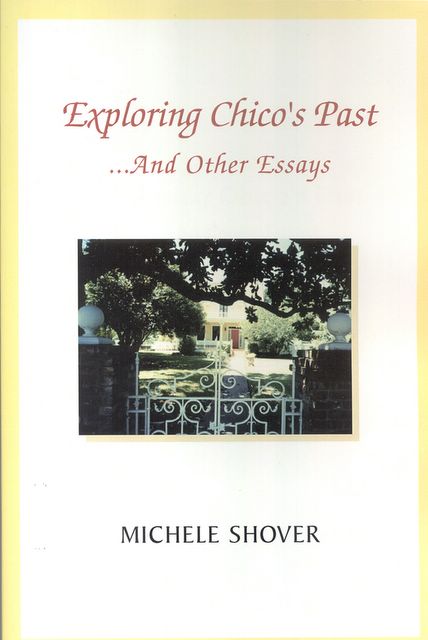
"Exploring Chico's Past ... And Other Essays" ($22.99 in paperback from Xlibris Corporation) is available in Chico at Lyon Books, Barnes and Noble, the university's A.S. Bookstore, Made in Chico and Bird in Hand.

The author will sign copies at Barnes and Noble (2031 Whitman Ave.) at 1 p.m. Saturday and the public is invited.

Though trained as a political scientist, Shover became interested in local history when she purchased the Little Chapman Mansion in 1976. It is perhaps the oldest house in Chico and its history is recounted in the first essay in the book, followed by a guide to "Searching Your Old House's History." Other essays include "Chico Women: Nemesis of a Rural Town's Anti-Chinese Campaign 1876-1888"; "The Black Experience in Chico, 1860-1899: Climbing the Slippery Slope"; and "Women at Work in 19th Century Chico." It's clear, as Lillibridge writes in the foreword, that Shover has an abiding "interest in and concern for the neglected and ignored in society as well as in historical studies."

Shover digs for detail. In a short piece on "Chico's Mystery Tunnels," the author tries to reconcile seemingly conflicting accounts of whether there were tunnels under "New Chinatown" in Chico on Cherry Street. (It was well known that Old Chinatown did indeed have "connected basements beneath the buildings that lined the east side of Flume between Seventh and Eighth streets.") It's likely, she concludes, for security reasons: "At recurring intervals over the 19th century, Chinese in Chico were at mortal risk to eruptions of anti-Chinese violence. Sometimes -- as in 1877, 1887, and 1894 -- these threats arose in the form of vigilante raids on their quarters."

The book also includes an account of the trial of Chico prostitute Molly White in 1883. She had been befriended by the First Methodist Church, North, but then came word "that popular teamster Riley Strahl had died at 1:30 a.m. -- of strychnine, people were saying -- while keeping company with Molly White."

Another short essay situates Chico's founder, John Bidwell, as a liberal; in her note to me, Shover explains: "It doesn't mean liberal as modern wing of the Democratic Party, but Liberal as in classical Lockean Liberal -- i.e., economically focused, individualistic and understanding government as a proper ally of business."

She's at pains to clear away certain myths about Bidwell, and Chico itself, so that Chicoans can "absorb a more sophisticated -- indeed a more interesting -- view of their collective past."

"Exploring Chico's Past" is an invaluable contribution toward that end.

Dan Barnett teaches philosophy at Butte College. To submit review copies of published books, please send e-mail to dbarnett@maxinet.com. Copyright 2006 Chico Enterprise-Record. Used by permission.

Thursday, April 20, 2006


A quiet journey into nature from an Orland area writer

By DAN BARNETT

Quite a few years ago, Daniel Thomas and his wife, Marilyn, moved from Sonoma County to a 10-acre parcel of land near Orland and staked their future.

Raised in Willows, Daniel Thomas returned to the Sacramento Valley after a series of heart ailments eventually forced his retirement from the public school system in the Bay Area. "The Ten," as the couple called it, was to become a refuge for creatures of every variety, from birds to black widows, from raccoons to opossums, and many cats.

But it took a lot of work. "When we first saw this piece of land," he writes in "Essays From the Ten" ($8.95 in paperback from Stansbury Publishing in Chico), "it was almost treeless. The house itself was in awful condition and a nearby shed was jammed with broken bottles, old tires, discarded tiles, slabs of concrete, rusty cans and rotting lumber. ... The property was littered with mounds of garbage. ... Its most endearing quality at the time was a seasonal creek which sliced through the northern edge of the property. In every other way the property was a disaster. It was love at first sight."

At least for Daniel. But the prospects of solitude worked their way into Marilyn's heart, too, and the couple began to transform The Ten.

In almost two dozen short chapters, Daniel reflects on his experiences. His writing is clear, engaging, humble. In the early days at The Ten he dug pond after pond, but then the work began to take its toll and pond digging stopped. It took years for the rhythm of the natural order to get into his bones.

"There was a time, for example, when I felt the need to count, name and record every bird I'd observe on the property. ... Now I make pleasant note of the egrets that visit my pond, or pause to admire the flitting about of a ruby-crowned kinglet, but I feel no need to jot down my sightings. Have I gotten lazy, or just content to enjoy the moment? A little of both I suppose."

Life on The Ten has meant coming to terms with the competition and violence of the natural world. Beavers return to Jewell Creek and proceed to fell Daniel's carefully planted poplars. Shielding the trees and putting out special Havahart traps are to no avail.

Daniel takes out a deprivation permit and the former hunter takes up the gun again. "The irony was only too clear. I had wanted to create an environment hospitable to a wide range of wildlife. And I had succeeded. Now I was about to violate one of my most sacred principles: on The Ten all life is sacred."

But then there's the story of Lucy and Anna, among 128 pigs from a farm in southwestern New York suffering from neglect and frostbite. An organization called Farm Sanctuary requested new homes for the animals, and the Orland chapter helped place Lucy and Anna on The Ten. They prospered.

"The other day we watched in amazement as the pigs trotted, cantered and then broke into a full trot across the field. Again I thought of Lucy's big chunk of missing ear. Surely, on their best days these pigs could not have dreamed of the splendid life they now enjoy. My wife and I touched hands, shared a loving glance ... and cantered all the way home."

Dan Barnett teaches philosophy at Butte College. To submit review copies of published books, please send e-mail to dbarnett@maxinet.com. Copyright 2006 Chico Enterprise-Record. Used by permission.
Thursday, April 13, 2006


Three-volume Easter journey with St. Augustine finds riches in 'Confessions'

By DAN BARNETT

The 13 chapters (or books) of Augustine's "Confessions," written in 397-400, continue to enthrall and challenge readers. Augustine had just become Bishop of Hippo (a name that means "seaport") in North Africa, but the document he produced is no dry ecclesiastical pronouncement. Instead, in the intimate language, he pours his heart out to God and to his readers and confesses that even as a man of faith he still seeks understanding.

As Christians celebrate Jesus' resurrection, it is well to remember that Augustine's story of his own Easter faith is full of surprises. Augustine is convinced that God was at work in his life even, when as a young man, he turned away from the family faith to pursue a career as a teacher of rhetoric and to satisfy his own sexual desires. His mother Monica's fervent prayers were eventually answered.

There are many translations of the "Confessions"; one recent and clear one is from Henry Chadwick ($7.95 in paperback from Oxford World's Classics). But while the first nine books recount Augustine's experience in becoming a believer, the 10th book, on memory, turns to Augustine's present philosophical concerns. The last three books deal with questions of time and eternity, creation and redemption, and how the earthly world connects with the heavenly realms. For many readers it is not easy going.

Those wishing a careful and scholarly guide through the "Confessions" will be delighted with the three-volume work of Carl G. Vaught, distinguished professor of philosophy at Baylor University. He writes that the books of the "Confessions" show a carefully structured thematic unity, which is portrayed in the titles of Vaught's trilogy, all published by the State University of New York Press: "The Journey Toward God in Augustine's Confessions (Books I-VI)" ($17.95 in paperback); "Encounters With God in Augustine's Confessions (Books VII-IX)" ($35 in hardcover); and "Access To God in Augustine's Confessions (Books X-XIII)" ($65 in hardcover). These books form a section-by-section commentary on Augustine's great work.

Vaught begins, as Augustine does, by asking lots of questions: "How shall we respond to a book as rich and complex as this? What approach should we take?" Vaught writes that though "Augustine speaks as a psychologist, a rhetorician, a philosopher and a theologian ... he speaks most fundamentally from the heart."

In order to best understand the "Confessions," Vaught writes, readers need to be aware of the time, space and eternal dimensions of the story. Regarding time, Augustine recounts his theft of pears when he was 16, his interest in philosophical wisdom and his being led astray by the Manichees (a sect that believed good and evil were locked in eternal battle). Spatially, Augustine's story deals not only with his outside world (the African church, the temptations of Italy) but the inside world of his own soul, the place he encounters God (though God is much greater than the soul and is its creator). The eternal dimension is about how God manifests himself in the created order, through memory and time and the sacraments, enabling Augustine to encounter the one who "made us for yourself"; and Augustine adds: "Our heart is restless until it rests in you."

Vaught's books provide the reader with an understanding of that rest.

Dan Barnett teaches philosophy at Butte College. To submit review copies of published books, please send e-mail to dbarnett@maxinet.com. Copyright 2006 Chico Enterprise-Record. Used by permission.

Thursday, April 06, 2006


Columnist goes positively eupeptic over new kind of thesaurus

By DAN BARNETT

Back in the day, say 1852, Peter Mark Roget, finding no thesaurus on the shelf, decided to write one himself, grouping words by related ideas and earning for himself a place in lexicographical history.

Subsequent thesauruses, rivals to Roget, dispensed with the grouping principle and simply listed words alphabetically. Not all of the synonyms were direct substitutes for the word synonymized. The assumption was (and is) that we readers know the nuances and simply need our mind jogged a bit. If we wanted a synonym for "steal" we might come across embezzle -- but we'd have to know that embezzling is a particular kind of stealing. (You can't embezzle a candy bar from the grocery store, but you can steal one. But you really shouldn't.)

Most of the synonyms in these word books were also likely as common as the original word -- ho-hum! Frankly, if we are looking for a sparkling alternative to quotidian diction, the thesaurus is a dinosaurus.

Of course, we might well turn to the many books that alphabetize unusual or obsolete words, but we can't have archaic and eat it, too, since how would we know that "natterjack" was just the word we wanted for a Western European toad that runs rather than hops?

Enter Philadelphia attorney Peter E. Meltzer who, after a decade of sedulous work on his avocation, has published "The Thinker's Thesaurus: Sophisticated Alternatives to Common Words" ($16.95 in paperback from Marion Street Press). Attempting to write the wrongs of thesauruses past (which he does in a marvelous 50-page introduction), Meltzer goes on to deliver the goods, thousands of ordinary words coupled with one or more less common synonyms. But he doesn't stop there. Some 75 percent of the entries contain "clarifiers" helping us understand the particular synonym's "spin." So wrongdoing "in public office" is malversation. And an occupation "requiring little work but paying an income" is a sinecure.

Meltzer writes that he has avoided the use of obsolete words (Shakespeare used a lot of them, but they weren't obsolete then, don't you know). To show their currency, the "thinker's synonyms" get illustrative quotations drawn from magazines, newspapers, and even books published in the last decade. The author quotes from a story in the Sydney Morning Herald from 2000 about the newest in adult education courses -- stripping. The quote comes in the entry for "bravado" and its synonym "fanfaronade": "Fanfaronade," says the story, "will take you through the steps necessary to become a confident exotic dancer. Each participant is expected to have partially completed a semester each of Tassel Making, Cracking Walnuts with Your Own Buttocks on Stage and Booking the Light Entertainment Circuit." Just so you know, there's also a good word for "having a nicely proportioned rear end": callipygian. Time magazine used it of Jennifer Lopez.

Some words cry out to be used in this day and age. Under "superficial (knowledge of a subject while pretending to be learned)" we find "sciolism" and a quote from a Montreal newspaper referring to talk show hosts. Oh, Canada: You, too?

What has me eupeptic (cheerful but, you know, in a scholarly way) is that "The Thinker's Thesaurus" is not a book for impressing friends with a lot of fanfaronade. It's a book that helps us think a little more clearly as we search for just the right word -- especially those who yearn to be philosophers and not mere philophasters.

This book may, however, make you a philosopher faster!

Dan Barnett teaches philosophy at Butte College. To submit review copies of published books, please send e-mail to dbarnett@maxinet.com. Copyright 2006 Chico Enterprise-Record. Used by permission.

Thursday, March 30, 2006


National Book Award winner Barry Lopez to speak at Chico State University tonight

By DAN BARNETT

Chico will be graced with a visit by nature writer Barry Lopez at 7:30 p.m. today at Chico State University's Laxson Auditorium. Advance tickets are $15 for adults, $7 for students from the University Box Office, 898-6333. Sponsored by Chico Performances and the university's Office of the Provost, Lopez's appearance is part of the new "On the Creek" lecture series which, according to a news release, "will present authors and lectures whose focus promotes and explores environmental and sustainability issues that affect the world today."

One of the best nature writers in the country, Lopez has published the best-selling nonfiction work "Of Wolves and Men" and has also written "nine works of fiction and several collections of essays, and has been honored with a John Hay Medal, a Guggenheim Fellowship, a National Science Foundation Fellowship and by the American Academy of Arts and Letters." Not a bad résumé!

But perhaps the book that most captured public attention is his "Arctic Dreams: Imagination and Desire In a Northern Landscape" ($15 in paperback from Vintage), first published in 1986. A winner of the National Book Award, "Arctic Dreams" exemplifies Lopez's concern with the interaction of human culture and the land. His is not a simplistic vision; in the epilogue he contrasts his own heritage with that of the Eskimo (adopting the standard term for a number of distinct peoples):

"One of our long-lived cultural differences with the Eskimo has been over whether to accept the land as it is or to exert the will to change it into something else. The great task of life for the traditional Eskimo is still to achieve congruence with a reality that is already given. The given reality, the real landscape, is 'horror within magnificence, absurdity within intelligibility, suffering within joy,' in the words of Albert Schweitzer. We do not esteem as highly these lessons in paradox. We hold in higher regard the land's tractability, its alterability. We believe the conditions of the Earth can be changed to ensure human happiness, to provide jobs and to create material wealth and ease. Each culture, then, finds a different sort of apotheosis, of epiphany and comfort in the land."

He adds that "No culture has yet solved the dilemma (of) ... how to live a moral and compassionate existence when one is fully aware of the blood, the horror inherent in all life, when one finds darkness not only in one's own culture but within oneself. ... There are simply no answers to some of the great pressing questions."

Lopez spent almost half a decade in the Arctic region researching his book, which includes chapters on musk oxen, polar bears, narwhals, the migration of birds and mammals, the history of human encounters with Arctic ice, the ever-changing Arctic landscape itself. "When you have walked for days under the enormous sky; when you have felt the remoteness of the world from the Thomsen river country of Banks Island; felt the unquenchable exuberance of sled dogs cracking off the frozen miles down a river valley; or been shown how some very small thing, like a Lapland longspur eating the lemming's bones for calcium, keeps the country alive, you begin to sense the timeless, unsummarized dimensions of a deeper landscape."

Later in the book Lopez writes the history of the European exploration of the "northern passage" and says that "They thought of the Arctic as fixed in time -- a primitive landscape, a painting, inhabited by an attenuated people." The reality is far otherwise.

People have had many (incompatible) dreams of what the Arctic might be, given their view of what it is and has been about. With a trained eye Lopez notes how industrialization is changing the face of the north but at the same time recognizes Eskimo hunting practices are not without violence. He is a careful and sensitive guide.

The book begins and ends with the author bowing to the natural world, giving it due regard. "This is a land," he writes, "where airplanes track icebergs the size of Cleveland and polar bears fly down out of the stars. It is a region, like the desert, rich with metaphor, with adumbration. In a simple bow from the waist before the nest of the horned lark, you are able to stake your life, again, in what you dream."

Dan Barnett teaches philosophy at Butte College. To submit review copies of published books, please send e-mail to dbarnett@maxinet.com. Copyright 2006 Chico Enterprise-Record. Used by permission.

Thursday, March 23, 2006


Chico financial planner offers advice for bequeathing the family farm

By DAN BARNETT

Chico's Kevin Spafford is a certified financial planner who specializes in farm "succession planning" defined broadly as "what is best for the family-owned business."

He writes that "farming is the quintessential family business. No other business endeavor is as emotionally charged as the family farm." But deep feelings can often prevent owners from thinking clearly about "the inevitable transfer of ownership" that comes sooner or later.

To help farm owners make wise decisions about that transfer, Spafford has published "Legacy By Design: Succession Planning for Agribusiness Owners" ($29.95 in paperback from Marketplace Books). He will be speaking and signing copies at 6 p.m. Friday at Lyon Books in Chico. The public is invited.

The book presents all the steps necessary to develop what Spafford calls a "comprehensive succession plan." The creation of such a plan, he writes, "may require a multi-disciplinary team of professionals, including a financial planner, an attorney, an accountant and possibly a banker among others. It involves planning and advice for multiple generations of the family. It includes financial, estate, retirement and business planning," each of which is covered in a separate section. In addition, "Legacy By Design" includes a large appendix with checklists and charts, a comprehensive glossary and a bibliography.

While the sections on estate and retirement planning are pretty detailed, even there Spafford maintains a conversational tone and includes a variety of case studies that connect with the real world.

The chapters on business plans and succession were the most interesting to me.

A business plan helps spell out how that particular agribusiness fits into its environment and what its prospects for growth might be. The environment has changed. "In the agricultural world of yesterday," Spafford writes, "commodities ruled. Today, there has been a significant change. Consumers are now willing to pay extra for unique and specialized products. Customers are seeking individual relationships with suppliers and vendors as never before. They want safe, healthy, and convenient food sold through a personal relationship of trust." Think farmers markets.

Something else has changed. Time was when labor was viewed as a cost and farm machinery as an investment. But the author points out that "when you factor in the benefits of long-term employees dedicated to business success, it is difficult to imagine them as an expense. Labor must be regarded as an investment. Like other systems on the farm, a skilled labor force improves the bottom line."(He also notes that it's better to view farm equipment as an expense rather than an investment.)

Family farmers may have developed a knack for making money over the years so it's hard for them to understand why a business plan is so important. But "farmers' earnings are squeezed today as never before. You are asked to do more with less. Input costs increase as commodity prices decline. Foreign competition exerts pricing pressures on all commodities. There seems to be a never-ending string of bureaucratic challenges each grower must navigate before applying many of the fertilizer or herbicide inputs that make agricultural practices so prolific. Automation which promotes efficiency in agricultural practices also increases capital expenditure."

All of these things and more need addressing in a business plan, especially if the farm is to be turned over soon to the next generation. "The way it's always been done" won't work anymore.

Just who will take possession of the farm is another significant issue, and Spafford focuses on the inevitable family difficulties when some members wish to remain active in the business and others do not. Active members may be interested in long-term investment whereas "passive" members may want short-term return. Conflict and rivalry are inherent in the process of choosing a successor, and the author offers a way through by considering not equal distribution of assets but "equitable" distributions to various family members. Those not involved in the business may well settle for a lower cash sum when the transfer comes, leaving the farm intact to be run by active members. Spafford is good on helping family farmers take a more objective look at the talent available to them, encouraging them to look to trusted employees or outside managers if family members are unwilling or unable to continue the business.

"Legacy By Design" offers a sensible and careful approach to a complex and emotional "passing of the baton."

Dan Barnett teaches philosophy at Butte College. To submit review copies of published books, please send e-mail to dbarnett@maxinet.com. Copyright 2006 Chico Enterprise-Record. Used by permission.

Thursday, March 16, 2006


Training books deliver the goods

By DAN BARNETT

These days there are some pretty sophisticated software applications available for those who want to design printed materials or create or enhance Web sites.

As for the tools of the trade, Adobe's InDesign for page layout and Macromedia's Dreamweaver for Web site construction are second-to-none.

InDesign is part of a larger suite of related computer programs, called "Creative Suite 2," which includes Photoshop and Illustrator which are both used to manipulate and create graphical content.

Dreamweaver (now at version 8) is also part of a group of tools called "Studio 8" which includes Flash, the industry standard for the production of animation and video for the Internet. With the recent acquisition of Macromedia by Adobe, both sets of software programs are being offered in one package.

Graphics and design professionals use InDesign or Dreamweaver every day and so develop a hands-on familiarity with each program's "feature set." But amateurs like me need considerable hand-holding and that's where training manuals come in. I've been especially impressed by the H-O-T (Hands-On Training) series developed by lynda.com and published by Peachpit Press out of Berkeley. Each volume includes a CD-ROM with training files and a couple dozen short movies that can be played on a computer and that illustrate especially complicated procedures shown in the step-by-step manuals. The authors voice their own movies and they are friendly and proficient.

Over the last number of months I've worked my way through "Adobe InDesign CS2 Hands-On Training" ($44.99 in paperback), by Brian Wood, and "Macromedia Dreamweaver 8 Hands-On Training" ($44.99 in paperback) by Daniel Short and Garo Green. (I love this stuff!)

I can attest that both are excellent guides. Two other guides are on hand which I can hardly wait to get to: "Flash Professional 8 Hands-On Training" by James Gonzalez ($44.99 in paperback) and "Macromedia Studio 8 Training from the Source" ($44.99 in paperback from Adobe Press/Peachpit, which also comes with a CD), by Shaowen Bardzell and Jeffrey Bardzell, with Bob Flynn.

The InDesign and Dreamweaver books, and the Flash guide as well, are reference works as well as training manuals. At various points throughout the chapters the authors present tables listing the various choices on a toolbar or in a submenu, such as paragraph formatting or rollover image options (used when the mouse pointer rests on a navigation graphic). Each of these guides begins with an overview of the program's interface and work area, but then focuses on various small projects that the reader completes in bite-sized sections. The InDesign book develops advertising brochures and postcards for the fictional "Tea Cloud" company; the Dreamweaver book extends the company to the Web with some 90 tutorials. (The Studio 8 book presents just two projects that cover hundreds of pages--the development of a static Web site for a fruit company and an interactive site on the poet Dante.)

The Hands-On Training books are a delight to the eye, with hundreds of full-color screen captures, sections of tips and tricks, and a style that keeps reminding the reader there are real people behind all those directions. "Congrats!" Brian Wood tells me at the end of chapter 12 in the InDesign book. "You have another chapter under your belt." (We all need encouragement.) The Dreamweaver book is especially well-designed; it's just elegant, with the muted color scheme of the practice Web site matching the book's own.

The emphasis in all of these manuals is learning by doing, as one might expect, but these guides also go beyond simple cookbook style ("select the object from page 1, copy the object, paste the object into page 2") to helping the reader see things a novice might overlook. In the Dreamweaver book, for example, one instruction is to click on a color you like to add a background color to a Web page. But then Short and Green add: "Look at the Code window. See how the XHTML is updated to reflect the changes you just made? This is a great way to learn XHTML. ... Go ahead and make some more changes to your page, but leave the Code window open so you can watch Dreamweaver 8 create all the XHTML." (XHTML is short for "Extensible Hyper Text Markup Language"; it's "the current standard for creating Web pages.")

In short, play around a little bit. I like that.

Dan Barnett teaches philosophy at Butte College. To submit review copies of published books, please send e-mail to dbarnett@maxinet.com. Copyright 2006 Chico Enterprise-Record. Used by permission.

Thursday, March 09, 2006


Childhood on the island of Murano -- A memoir of Italy has a Chico connection

By DAN BARNETT

Some 34 years after she came to America, Walnut Creek resident Lucia Barbini Falcone finds herself back in northeastern Italy for a vacation with her large family.

Her mother is in bed, frail, "not like the determined and energetic person she had been. No. All traces of Mama have disappeared. What lies in bed now is a scribble of the original. Not even an imitation of my mama, only a forgery." It is inevitable, perhaps, that memories flood in.

"I think of my heritage, of my childhood, of all of our relatives and friends who still live on the small island of Murano and in my mind I see a young girl walking over bridges with her siblings and friends, talking to relatives and passersby."

Murano, Falcone writes, is "a speck of land in the Venetian Lagoon adjacent to Venice. ... A place -- which at times seems to appear and disappear within the depth of its capricious tides -- not only linked by its bridges, but as well by the written and unwritten laws engraved within its social fabric."

Later, recounting a visit to Murano with a childhood friend, she would write of "a mystical world in which fantasy and reality fuse into one. I savor the beauty of it all, just like I savor the stories of my childhood veiled by time, that have become more magical with each passing year."

That world is evoked in "Over Bridges, Across Tables: Growing Up On the Island of Murano" ($16.95 in paperback from Trafford Publishing or from Falcone Books, P.O. Box 3463, Walnut Creek, 94598) in which the author becomes a character, Anna Marchini. "I've taken the liberty of rearranging names and certain events," she writes, "out of respect for my family and friends in Murano, but the essence of the stories is true."

Falcone is the sister-in-law of Joyce Anderson of Chico, who wrote me that "two of Lucia's three daughters attended and graduated from Chico State so Lucia has been a frequent visitor to Chico. ... Nicole, their eldest daughter, married a young man from Murano. ... Through the years Lucia's nieces, nephews and sisters have visited this area. They've been impressed by our big park and especially with the university campus, although during an August visit, one sister remarked that being in Chico was 'like living on the sun.' For generations Lucia's family have been glass makers, and it's interesting to know that in Murano, famous for its glass, they admire the works of our very own Orient and Flume. (The letters 'ch' are pronounced with a 'k' sound in Italian, so 'Chico' is mispronounced there as 'Kiko.')"

"Over Bridges" is full of dozens of vignettes of Murano life. The island is only 1,100 acres and now has a population of 7,000, but to young Anna it was an entire world. Born in 1949, Anna grew up with five siblings. Her mother, Teresa, had fallen in love with her husband, Nicolò ("Nico") when she was just 13. Anna thought it was not so strange, then, when she, age 12, fell in love with a young man named Davide. Mouths flapped, of course, but that was to be expected. "On the island, people took a fragment of your life and made it their own when there was not enough excitement in theirs."

Anna and her friend Tina "walked to forbidden corners of the island, even after Mama's friend, Signora Lena, told us that if we took one step past the lighthouse, or went to the cemetery after dark, people would put a tabarro over our heads and shoulders. When I asked Mama what her friend meant, she explained that a tabarro was a dark, imaginary mantle made up of people's gossips."

Tying all her memories together is the presence of Papa Nico, painter, incurable optimist, a man whose income from work at the mirror glass factory could hardly keep up with household needs. He joked with his children and his wife, he invited strangers home when there was little to eat (there were no second helpings), "he filled his and our lives with small pleasures. Via the everyday rituals, the celebrations, the small lessons of love, he passed on to us the true essence of life."

Dan Barnett teaches philosophy at Butte College. To submit review copies of published books, please send e-mail to dbarnett@maxinet.com. Copyright 2006 Chico Enterprise-Record. Used by permission.

Thursday, March 02, 2006


Skyway poet writes of 'dangerous places in our dangerous time'

By DAN BARNETT

Paradise writer and "Skyway poet" Sally Allen McNall won the State Street Press competition for her chapbook, "How To Behave At the Zoo and Other Lessons"; her book manuscript, "Rescue," received the Backwaters Press Prize.

Now, in a new chapbook, "Trying to Write a Poem Without the Word Blood In It" ($6 in paperback from PWJ Publishing, www.wellinghamjones. com), McNall harnesses poetic energy to cry out against the absurdities and injustices she sees all around. The poems do have a lot of blood in them--the bloodshed of war, the bloodshed of a poet whose only refuge seems to be in a dream "where no one hates you, there's no impossible job to attempt." True to the typo on the front cover, hers is a "work" of blood.

The first of the 18 poems here sets the tone. "Before This War Is Over" is not about our present conflicts (or is it?) but takes the reader back to the days of Vietnam. "The young mother knows what she / has just done" in hiding the news from her son. She "knows she'll deceive / her little boy as long as she can about how / blood pumps out, or blooms purple under / skin, and how perfect strangers will spit / on you." Why? "She wants her son to remember peace" but "this is hopeless. ... And rage / is splashing up and down / her skin like ten gallons of gasoline / and any grownup / could be the match."

The final poem, "Quill," reminds the reader how hard it is to forget.

We don't decide what to remember. The brain's master etchers
do their best work for the disaster, for war, rage, shame.
The rapist surges like a troll from under the bridge, grabs,
grapples. The girl can't forget a second of it for years.
No matter how safe we feel just before it happens, or how
we've drilled ourselves to be calm, the world takes us.

I don't believe in angels, but it amuses me to think each of us has
a recording angel, our personal chemist and electrician--impartial,
lacking fellow-feeling, dipping her quill in our rushing blood
or hacking, keystroke by keystroke into our hearts, tattoos and operas.
SAVE, she commands, SAVE, SAVE, and we are helpless,
we bear her art forward in us, into our darkness, into our light.


In the poem that gives the chapbook its title, the writer imagines watching a movie backwards and imagines blood returning into a person and the wound closing. And then she writes, "... I have lost a lot to this / century, I am exhausted, I would like it back, / scooped, sopped up, suctioned from wherever it is, / and siphoned back in me, for future use."

The poet had "A Welcome To the Real World" long years ago. "I was 17, it was still the '50s, / when one college teacher pried up one / little corner of what this country / officially believed-- believes-- / about itself. We were reading the / Communist Manifesto in order / to learn what was wrong with it. I don't / remember exactly what he said / that made me think he liked Marx. // I thought of him today, / while preparing the kitchen floor / for the new tiles. / The floor looked like the black / bed of a bad road leading out of some city where / everyone hates us-- with some reason-- / where it's not sensible for me to talk / alone or in company, in any dress."

The despair and anger in these poems is at times relieved by ironic whimsy, from the "recording angel" to the time when "The Last Secular Linguist Leaves Her Spiderhole" (what a title) who wonders, if "God be with you!" eventually became "good-bye," what "God bless you!" will become.

But even "Going To the Theatre" brings back crimson thoughts. "In Shakespeare's really bad play, the girl is raped, / her hands chopped off, her tongue cut out. ... / Today, around the world, long streets fill / with the spoken word peace. Once the lips / part from the initial sound, the tongue flattens, / pulls back, the lips stretch wide before / the final hiss, tongue pointed at teeth. Silent, / we leave the play, we dream real blood."

Dan Barnett teaches philosophy at Butte College. To submit review copies of published books, please send e-mail to dbarnett@maxinet.com. Copyright 2006 Chico Enterprise-Record. Used by permission.

Thursday, February 23, 2006


Retired Oroville teacher tells story of a daughter lost, a family united in tragedy

By DAN BARNETT

"I love young babies," writes Olivia Claire High, who retired in 1997 after 19 years teaching in Oroville elementary schools. "They come from their special little cloistered world, with their own unique chemistry. There's a certain mystery about them that intrigues me. I can't help wondering what goes on inside their pure little minds when I see the myriad of expressions flitting across their tiny faces."

When their first daughter, Kathy, was born to Claire and her husband Joe in 1958, Claire was a young married, "barely 19," "a 'color inside the lines' kind of person" who liked "to plan each page of my life as much as I possibly can." But plans go awry. Kathy was born with a cleft lip.

But surgery repaired the damage early on, and Claire welcomed their second daughter, Kari Suzanne, born in 1960, hoping that lightning would not strike twice. Yet during Kari's infancy Claire would have a recurring nightmare of her death. Kari lived 6 years, the last three battling an especially aggressive form of leukemia, a story her mother could not recount until now, all these many years later.

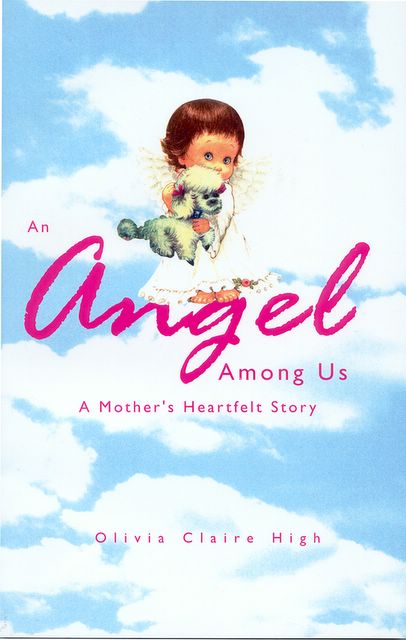
"An Angel Among Us: A Mother's Heartfelt Story" ($16.95 in paperback from I & L Publishing in Oroville, www.ilpublishing.com) presents not only Kari's physical struggle but her mother's spiritual struggle as well. "I kept trying to figure out why this awful thing was happening. The more I probed, the less I understood. Why was God letting this happen to Kari? Was it my fault? Was He punishing us? Was He trying to teach us a lesson? I couldn't find one convincing reason to justify any of this intolerable heartache we were going through. It would have been so easy to turn away from God, but I couldn't because I needed His spiritual sustenance. Still, it wasn't easy walking through the minefield of events laid down by Kari's illness."

There was no miraculous recovery for Kari though her illness frequently went into remission. Her reaction to multiple-drug therapy often made matters worse. Trips from Oroville to the UC Medical Center in San Francisco became all-too-routine and the companionship of other families with severely ill children was bittersweet. Who would succumb next?

Most of the book is a detailed record of Kari's struggle and the reader almost wants to turn away in the face of such suffering. A published story about the book noted that Claire had kept a journal since her teenage years, something to draw on when hazy memory begins to play tricks. But it is clear that Claire High's story is not self-pitying. The writing is straightforward, the evidence of some emotional distance. "Joe and I feel so fortunate these days," she writes toward the end of the book. "We have three loving daughters who share our lives. We still think about Kari and will always wish that she could still be here with us in body, as well as spirit. ... She seems to be in my thoughts more now that I'm getting older. I've tried to make some sense out of why Kari had to suffer so much, but I don't think I ever will. I'll always think of leukemia as a thief. It is a robber of life and happiness, of futures and dreams. I do not spend my days wallowing in bitterness, but the sadness is there. My heart still feels the pain of my daughter's ordeal, but I can't dwell on it because I have so much to be thankful for."

Not long before she died Kari whispered to her mother, "Take care of Cuddles for me." Cuddles, a miniature poodle, had been a constant companion in her last year. Those words would prove to be Kari's last. "She passed away the next morning; it was Joe's 35th birthday. Her life's brief journey had come to an end."

More than a dozen black-and-white photographs enhance the poignancy of the story.

"Kari enriched our lives with her presence," Claire writes, "but she was a precious little gem we were not meant to keep. It's very hard not to miss someone you've loved so much. You have your memories, but they are not flesh and blood you can hold in your arms, nor do they give you the sound of their laughter. Only the cherished echoes remain."

Dan Barnett teaches philosophy at Butte College. To submit review copies of published books, please send e-mail to dbarnett@maxinet.com. Copyright 2006 Chico Enterprise-Record. Used by permission.